
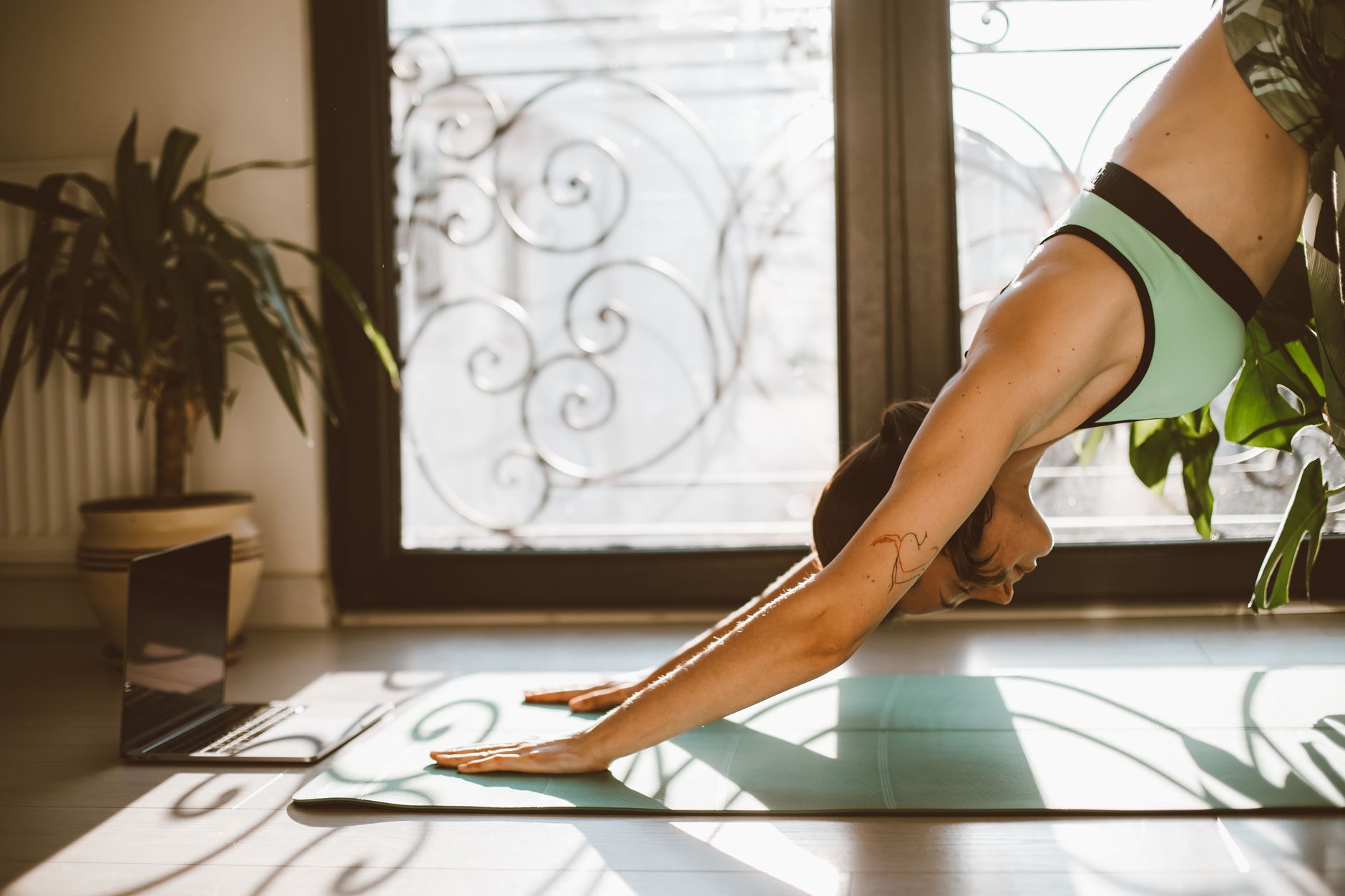
A realistic twenty minute strength plan for moms over thirty five, why lifting matters more now, and the small amount of kit you need, with US and UK pricing.
I spent most of my thirties doing cardio because I thought that was what exercise was. Walking, the occasional run, a spin class when I could get to one. It was fine. It kept me moving. And then at thirty seven I struggled to get a car seat with a sleeping toddler in it out of the back of a car, and I had that specific, undramatic realization that something had quietly declined while I was not paying attention.
Nobody had told me that muscle mass starts declining measurably from around your mid thirties, or that the decline accelerates through the years around menopause, or that strength training is the only thing that meaningfully reverses it. That information had simply never reached me, despite years of reading fitness content aimed squarely at women my age. So I started lifting, badly at first, in twenty minute sessions in my bedroom. Three years later I can carry both children up the stairs at once, which is not a fitness goal anyone puts on a poster and is genuinely the thing I value most.
Why This Matters More Now Than It Did at Twenty Five
The biology is straightforward and it is worth understanding, because it changes how you think about the time you spend.
Muscle mass begins declining gradually from the mid thirties and the rate increases with age unless you actively work against it. This is not just about how you look. Muscle is what carries you up stairs, catches you when you trip, and supports your joints. Losing it quietly over a decade is what turns ordinary tasks into effortful ones.
Bone density follows a similar curve and drops more sharply around and after menopause. Weight bearing and resistance exercise is one of the few interventions that reliably supports bone density, and starting in your thirties builds a buffer rather than trying to recover from a deficit later.
Strength work also does more for how your body handles daily physical load than cardio does. Carrying, lifting, crouching and hauling are strength tasks, and they are most of what parenting a small child physically involves.
None of that means cardio is wasted. Walking is genuinely excellent and I do it daily. But if you have three hours a week for exercise and you are over thirty five, the evidence says two of those hours should involve resistance.
The Kit You Actually Need
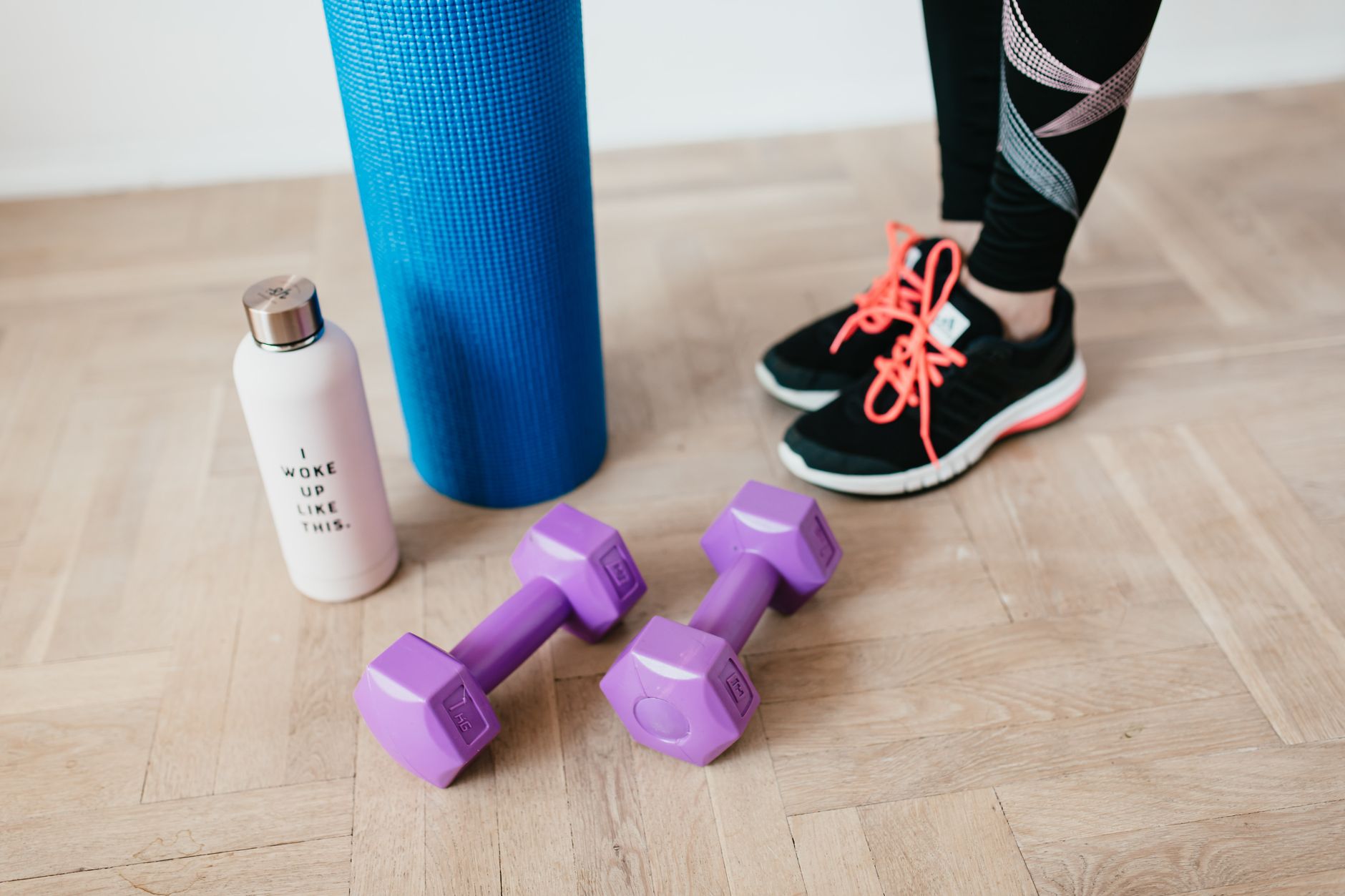
Almost nothing, which is the good news.
One kettlebell, eight to twelve kilograms or eighteen to twenty six pounds, at $30 to $60 or £25 to £50. This single item covers squats, hinges, presses, rows and carries. Coated rather than bare cast iron if it lives on a hard floor.
A set of looped fabric resistance bands, $15 to $30 or £12 to £25. For glute work, warm ups, and adding difficulty to bodyweight movements without adding weight.
A thick yoga mat, $25 to $50 or £20 to £40. At least six millimeters, because floor work on a thin mat is unpleasant enough to skip.
Optional, once you are established: a second heavier kettlebell or a pair of adjustable dumbbells, $80 to $150 or £70 to £130. Buy this only when your first bell has become genuinely easy for squats, which will take several months.
That is under a hundred and thirty dollars for equipment that will serve you for years. The barrier here has never been money.
The Twenty Minute Plan
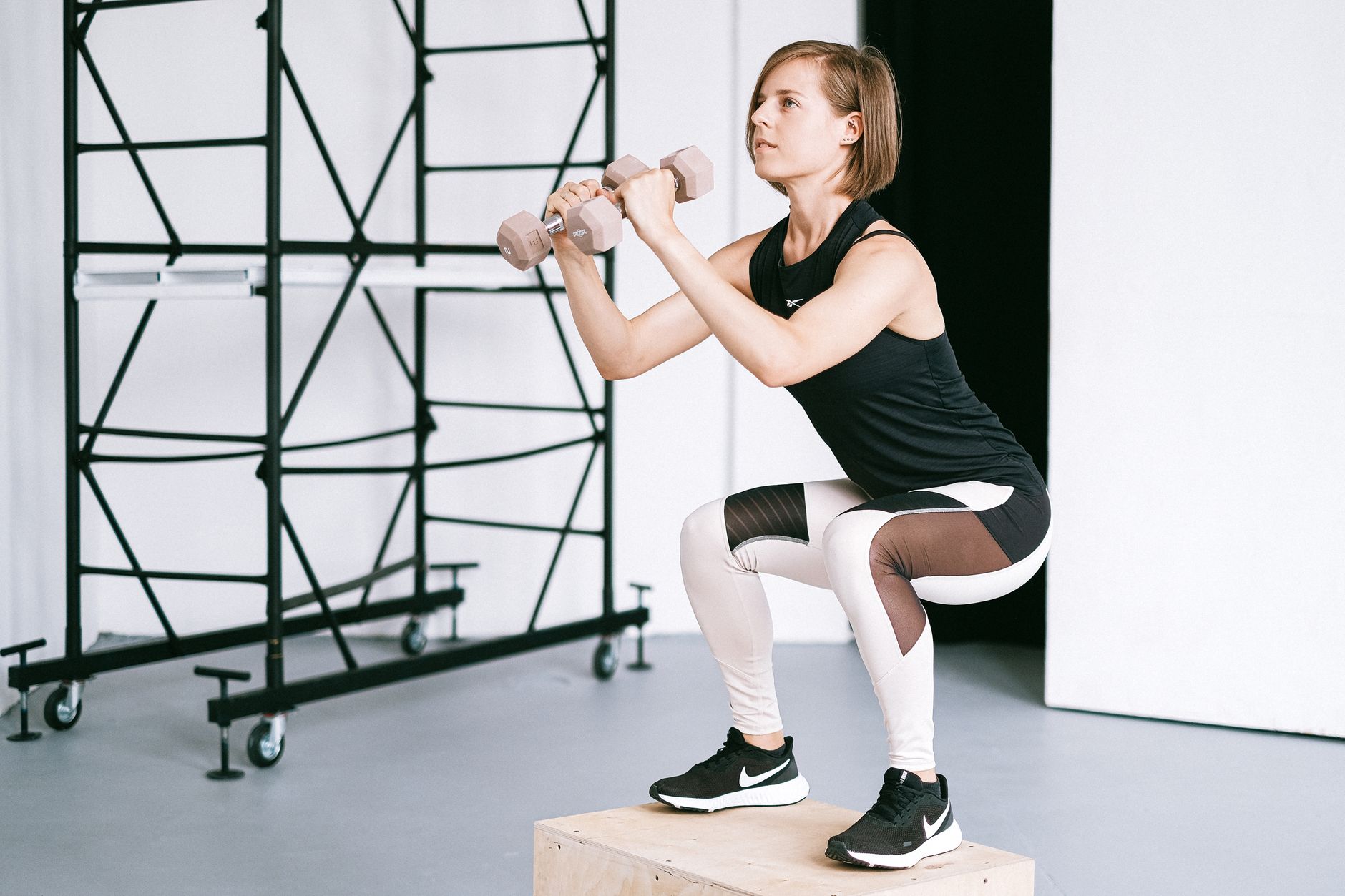
Three sessions a week, non consecutive days where possible. Each session is the same structure with two alternating workouts, which removes the decision making that kills consistency.
Warm up, four minutes. Thirty seconds each of marching on the spot, arm circles, hip circles, bodyweight squats, glute bridges, cat cow, thoracic rotations, and standing side bends. Do not skip this. At this age it is the difference between training and being injured.
Workout A, fourteen minutes. Three rounds, forty five seconds work and fifteen seconds rest on each movement. Goblet squat with the kettlebell. Bent over row, both hands on the bell or one at a time. Glute bridge with a band above the knees. Overhead press, alternating sides. Suitcase carry, walking with the bell in one hand, swapping halfway.
Workout B, fourteen minutes. Same format. Romanian deadlift with the kettlebell, hinging at the hips with a flat back. Push up, on knees or against a counter if needed. Band assisted lateral walk. Reverse lunge, alternating legs. Dead bug, on the mat, moving opposite arm and leg slowly.
Cool down, two minutes. Hip flexor stretch, chest doorway stretch, upper back stretch. Especially important if you carry a child on one hip, which quietly builds asymmetry.
Alternate A and B across the week. Week one is A, B, A. Week two is B, A, B. That is the entire program.
How to Progress Without Overcomplicating It

Progression is the part most people miss, and it is why so many home workouts stop producing results after two months. Your body adapts to what you ask of it, so the ask has to increase.
The simplest approach at home is to add reps before adding weight. In week one aim for eight repetitions in each forty five second block. Each week try to complete one more repetition in the same time, with the same quality. When you can comfortably do fifteen good repetitions in the block, it is time for a heavier weight.
When you do add weight, jump up meaningfully rather than by a token amount, and drop your repetitions back down. Going from eight kilograms to twelve is a big jump and it should feel like one for a few weeks.
Track it. One line in a note on your phone after each session, listing the workout and the reps. This takes ten seconds and is the difference between training and just moving around. I resisted this for a year on the grounds that it felt excessive, and I was wrong.
Rest matters more now than it did a decade ago. Three sessions with proper recovery beats five sessions of accumulated fatigue, particularly if you are also sleep deprived, which most people reading this are.
| Equipment | Price (US) | Price (UK) | Covers | Buy it |
|---|---|---|---|---|
| Kettlebell, 8 to 12 kg | $30 to $60 | £25 to £50 | Squats, hinges, presses, rows, carries | First |
| Looped fabric bands | $15 to $30 | £12 to £25 | Glutes, warm ups, bodyweight progression | First |
| Yoga mat, 6mm or thicker | $25 to $50 | £20 to £40 | Floor work, comfort, grip | First |
| Second heavier kettlebell | $40 to $80 | £30 to £65 | Progression on lower body | Month four onward |
| Adjustable dumbbells | $80 to $150 | £70 to £130 | Upper body variety and progression | Optional, later |
| Furniture sliders | $2 to $12 | £2 to £10 | Core and hamstring work | Cheap addition anytime |
The Postnatal and Perimenopause Notes
If you are within the first year of giving birth, get cleared at your postnatal check before starting loaded strength work, and if you have any symptoms such as leaking, a feeling of heaviness or pressure, or you suspect abdominal separation, ask for a referral to a pelvic health physiotherapist first. Build from breathing and pelvic floor work, then bodyweight and bands, then weight. Skip planks, crunches and jumping in the early months until you have been assessed. This sequencing is not fragility, it is what prevents problems that otherwise take a year to fix.
If you are in your forties and noticing changes in sleep, mood, recovery or body composition, strength training is one of the most useful things available to you, and it becomes more valuable rather than less as hormonal changes progress. Recovery does take longer than it used to, so three quality sessions genuinely beats five rushed ones. If symptoms are significantly affecting your daily life, that is a conversation worth having with your doctor rather than something to train your way through alone.
Anyone with existing joint problems, back pain or a medical condition should get individual guidance before starting a loaded program. A single session with a qualified trainer or physiotherapist to check your squat and hinge patterns is money extremely well spent and will save you months of doing something subtly wrong.
If You Are Shopping in the UK
Decathlon is the best value source for everything on the kit list, with kettlebells, bands and mats all at the lower end of the ranges above and physical stores where you can pick up a bell before committing to a weight. Argos and Sports Direct carry the basics with regular discounting, and the Aldi and Lidl fitness ranges in January and June are worth watching for kettlebells and mats at very low prices.
For coaching, many British leisure centres run strength classes at a fraction of private gym pricing, and some offer postnatal specific sessions. Private personal training in the UK typically runs £40 to £70 per session outside London and more within it. One or two sessions purely to have your technique assessed is a genuinely worthwhile use of that money even if you then train alone.
Pelvic health physiotherapy is available on the NHS in many areas, though access varies considerably by region and waiting times can be long. Self referral is possible in some trusts. Privately it typically runs £60 to £100 per session, and a single assessment session is often enough to know what you should be doing.
Do’s and Don’ts: Strength Training Over Thirty Five
| Do's | Don'ts | |
|---|---|---|
| 1 | Train three times a week with rest days between | Train five days and accumulate fatigue on poor sleep |
| 2 | Warm up for four minutes every single session | Skip the warm up because the session is short |
| 3 | Learn the squat and hinge patterns properly first | Add weight to a movement you cannot do unloaded |
| 4 | Add reps before adding weight | Do the same eight reps with the same bell for a year |
| 5 | Write down what you did after each session | Rely on memory and wonder why progress stalled |
| 6 | Buy one kettlebell and learn it thoroughly | Buy a full weight rack before establishing the habit |
| 7 | Include carries and single sided work | Ignore the asymmetry from carrying a child on one hip |
| 8 | Get cleared postnatally before loading weight | Return to planks and jumping before assessment |
| 9 | Consider one session with a trainer to check technique | Assume video tutorials will catch your own errors |
| 10 | Keep sessions to twenty minutes so you finish them | Design an hour long plan you will abandon in a fortnight |
| 11 | Prioritize strength over cardio if time is limited | Assume walking alone maintains muscle and bone |
| 12 | Take rest seriously as part of the program | Treat a rest day as a failed training day |
FAQs
Why is strength training more important after thirty five?
Muscle mass begins declining measurably from around the mid thirties and the rate accelerates with age, particularly through the years around menopause. Bone density follows a similar pattern. Resistance training is the most effective intervention available for both, and it also improves how your body handles the specific physical demands of parenting, which are almost entirely strength tasks rather than endurance ones. Starting in your thirties builds a buffer rather than trying to recover a deficit in your fifties.
How often should I strength train to see results?
Three sessions a week is the sweet spot for most people and produces noticeable change in strength within eight to twelve weeks. Two sessions maintains what you have and still delivers real benefit. More than three offers diminishing returns for beginners, particularly when sleep is limited, because adaptation happens during recovery rather than during the session itself. Consistency across months matters far more than intensity in any single week.
Will lifting weights make me bulky?
No. Building significant muscle bulk requires a sustained combination of very high training volume, specific eating and, for most women, considerably more time than three twenty minute sessions a week. What resistance training realistically produces over months is greater strength, better posture, and a body composition that feels firmer rather than larger. The change most people report is being able to do physical things more easily, which is the point.
What weight should I start with?
For most women new to kettlebell training, eight kilograms or around eighteen pounds is a sensible starting point for squats and rows, and lighter for overhead pressing until the movement feels stable. If eight feels genuinely easy for a set of twelve squats, move to twelve kilograms. The common error is starting too light, because a weight that does not challenge you produces no adaptation, but starting too heavy on an unfamiliar movement pattern is how people injure their backs. Master the pattern unloaded first.
Is it safe to strength train postpartum?
Yes, with correct sequencing. Get cleared at your postnatal check, start with breathing and pelvic floor work, progress through bodyweight and resistance bands, and add external weight once you are moving without symptoms. If you experience leaking, pressure or heaviness, back pain, or you suspect abdominal separation, seek a referral to a pelvic health physiotherapist before adding load. Avoid crunches, planks and high impact movements in the early months until assessed.
Do I need a gym membership to build strength?
No. One kettlebell, a set of bands and a mat cover everything in this program, and that combination will keep producing progress for well over a year if you apply progressive overload properly. A gym becomes genuinely useful when you want to lift substantially heavier than a single kettlebell allows, or when you want access to barbells and machines for specific goals. For general strength, bone health and functional capacity, home training is more than sufficient.
How long before I notice a difference?
Neurological improvements come first, and most people find movements feel easier and more coordinated within two to three weeks. Measurable strength gains typically appear between six and eight weeks. Visible changes in body composition usually take twelve weeks or more and depend on many factors beyond training. The most commonly reported early change is functional, things like carrying shopping, lifting a child or climbing stairs feeling noticeably easier, and that often shows up before anything visible does.
What if I only have ten minutes instead of twenty?
Do half. Cut to two rounds instead of three and keep the warm up, because the warm up is where injury prevention lives. A ten minute session done three times a week is dramatically better than a twenty minute session done once, and consistency across months is what builds strength. The plan is deliberately structured so that dropping a round leaves you with a coherent workout rather than a fragment.
You Might Also Like