

Introduction
Nobody tells you that working from home would be harder on your body than the office job you left. Back then you had a commute that forced you to walk to the parking lot, stairs you climbed twice a day without thinking about it, and coworkers whose lunch run you got dragged into once a week. Now your commute is twelve steps from the bedroom to the kitchen table, your stairs are optional, and lunch happens over your keyboard between back to back calls. If you’ve started noticing that your back hurts by 2pm, your shoulders are perpetually hunched toward your ears, and your hips feel like concrete after sitting for six hours straight you are not imagining things. The desk body trap is real, and it’s targeting work from home moms specifically hard.
Research backs this up. A 2022 systematic review found that remote workers saw a 66.7% increase in sedentary behavior compared to office workers, alongside a 34.7% drop in total physical activity. For moms, the numbers are likely worse. Between morning school runs, Zoom meetings, homework help, dinner prep, and the constant background task of keeping a household running, intentional exercise often gets completely squeezed out. You’re exhausted by the time the kids are in bed, and the body that carried you through the day is stiff, sore, and not getting any better tomorrow. The good news is you don’t need a gym membership or a two hour morning routine to fix this. You need a strategy that fits the reality of your actual day.
Why WFH Is Especially Hard on Mom Bodies
Office workers, whatever their other complaints, tend to accumulate incidental movement throughout the day walking to meeting rooms, chatting at a colleague’s desk, stepping out for coffee. That background activity adds up to thousands of steps that never make it onto a fitness tracker but absolutely matter for your metabolic health. When you work from home, most of that disappears overnight.
For moms, the sedentary problem is compounded by one specific factor: you’re also managing the household in real time. That sounds like activity, but it usually means sitting at your desk while mentally tracking dentist appointments, school forms, and what needs to come out of the freezer for dinner. The cognitive load is enormous but the physical movement is minimal. When sitting for prolonged periods, your muscles reduce their activity so dramatically that your body’s ability to regulate blood sugar, control blood pressure, and break down fat all decline. Pair that with chronic stress and poor sleep both very normal for working moms and you have a recipe for the kind of slow creeping health deterioration that doesn’t show up dramatically until it really shows up.
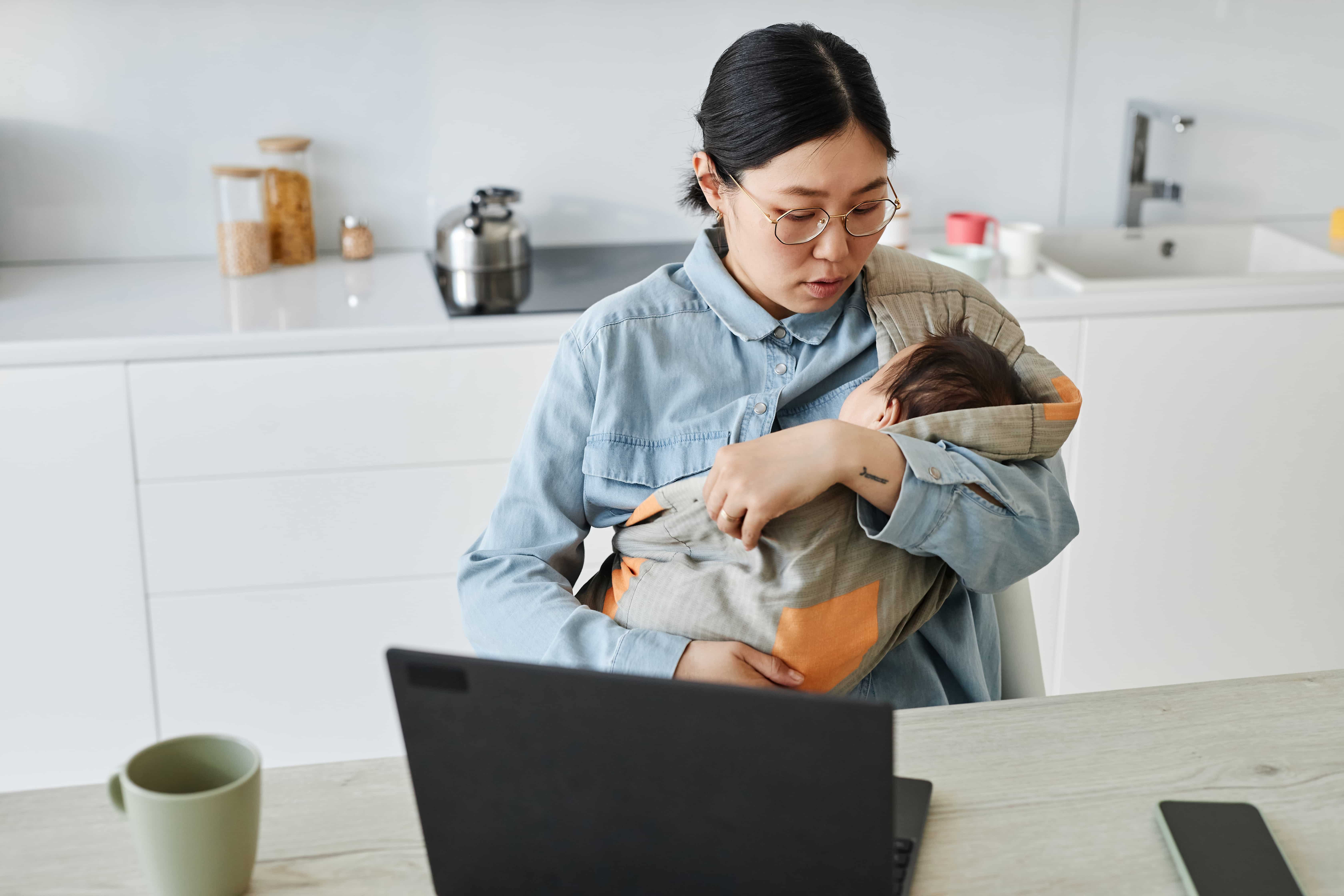
The physical symptoms show up first: lower back pain, tension headaches, tight hip flexors, neck stiffness, and the particular misery of shoulder blades that feel like they’re stuck in a vice. These aren’t just discomforts to push through. They’re your body signaling that it needs something to change.
Getting Your Workspace Actually Right
Most home office setups for moms are improvised a kitchen chair that’s slightly too low, a laptop on a coffee table, a makeshift desk in the corner of a room that also houses the kids’ art supplies. It gets the job done, but over eight hours, it’s grinding your spine down.
Your monitor or laptop screen should sit at eye level so your neck stays neutral. If you’re working on a laptop, prop it up on a stack of books or a cheap laptop stand and connect an external keyboard. Your eyes should land naturally on the top third of the screen without you tilting your head up or craning it down. Your chair height matters too feet flat on the floor, knees at a 90 degree angle, elbows at the same angle when typing. If your chair doesn’t support your lower back naturally, roll up a hand towel and tuck it into the lumbar curve. It sounds too simple to work, and it genuinely works.
Your keyboard and mouse should sit close enough to type without reaching forward. Reaching forward even a few inches shifts load to your neck and upper trapezius muscles, which are likely already the source of that tension headache you’ve been pretending doesn’t exist. Rearranging your desk setup takes about 20 minutes and costs almost nothing if you already have the equipment it’s one of the highest return health improvements a WFH mom can make.

Movement Breaks: The One Non Negotiable
Here is the uncomfortable truth: even a perfect ergonomic setup cannot save you if you sit in it for five hours without moving. The human body was not designed for extended static postures regardless of how well aligned they are. The research consensus is a break every 30-45 minutes not a full workout, just a disruption of the sitting pattern.
The reason most people don’t do this isn’t lack of information; it’s that work feels urgent and taking a break feels like falling behind. For moms this is doubly loaded because you’re already fighting the narrative that you should be working every second the kids are occupied. Here’s the reframe: movement breaks make you more productive. A five minute walk between tasks resets your focus, and the cognitive reset you get from briefly stepping away from a problem will often solve it faster than another 20 minutes of staring at the screen.
Set a timer on your phone or use a browser extension like Stretchly. When it goes off, stand up, walk to another room, do a short stretch sequence, or just stand at the kitchen counter for a few minutes. If you have kids home with you, use their demands as movement cues when someone needs a snack or has a question, get up and walk to them instead of shouting from your desk. Let the interruptions work for you.
Specific Moves That Undo Desk Damage
You don’t need a yoga mat or workout clothes. These are things you can do in the 3-5 minutes between tasks, in work clothes, in whatever space you have.

Hip flexor stretch: Kneel on one knee (use a folded towel if you’re on a hard floor), shift your weight forward until you feel a pull along the front of the hip of the kneeling leg. Hold 30 seconds per side. This addresses the hip shortening that happens from hours of seated hip flexion.
Thoracic extension over chair: Sit near the edge of your chair, clasp your hands behind your head, and gently lean backward, opening your chest toward the ceiling. This counteracts the forward rounding posture you spend all day in.
Shoulder blade squeeze: Sit up straight and pull your shoulder blades toward each other and down, as if you’re trying to tuck them into your back pockets. Hold for five seconds, release, repeat ten times. This activates the mid back muscles that get completely switched off when you’re hunched forward.
Calf raises while standing: Stand at your kitchen counter and do 15-20 calf raises. This promotes circulation in your lower legs and reduces the pooling that contributes to ankle swelling and varicose vein risk.

Neck side stretch: Drop one ear toward the corresponding shoulder and gently apply light pressure with your hand for 20-30 seconds per side. Do not force it. This releases the scalene and upper trapezius tension that causes most WFH headaches.
Building a Routine That Actually Sticks for Moms
The mistake is trying to build a routine around time you don’t have. Moms who work from home often don’t have a clean 45 minutes in the morning or 30 minutes at lunch. But almost everyone has 3 minute windows scattered throughout the day, and that’s where this approach lives.
Anchor your movement breaks to things that already happen. Before your first morning call, do five minutes of stretching while your coffee brews. At the end of every meeting, before you open the next task, stand up and move around for three minutes. Use your lunch break even if it’s 20 minutes to walk around the block. Not a long walk, just around the block. Fifteen minutes at a moderate pace every day adds up meaningfully over a week.
If you have a toddler at home, use their nap windows for movement first, screens second. A 20 minute workout during a nap recharges you more than 20 minutes of scrolling, even though it feels harder to start. Keep a resistance band or a light set of dumbbells visible on your desk or windowsill. Visual cues matter equipment you have to dig out of a closet rarely gets used.

Hydration also plays a bigger role in work from home mom health than most people credit. When you work from home you’re less likely to walk to a water cooler, and dehydration mimics fatigue and brain fog, making you feel like you need to push harder rather than move more. Keep a large water bottle on your desk and refill it at least twice before 3pm.
Do’s and Don’ts Table
| Do's | Don't |
|---|---|
| Set a movement alarm every 30-45 minutes | Sit through back to back meetings without standing |
| Position your screen at eye level | Work on a laptop flat on a coffee table or couch |
| Use a lumbar support (even a rolled towel) | Sit in a chair that tilts you forward or sinks under your weight |
| Drink water consistently throughout the day | Rely on coffee only and wonder why you're stiff and headachy |
| Walk around the block at lunch, even briefly | Skip all outdoor movement on days you feel busy |
| Do a 3 minute stretch between tasks | Save all stretching for a gym session you may not attend |
| Keep equipment visible on your desk | Store workout gear where you have to hunt for it |
| Use your kids' interruptions as movement cues | Stay seated every time a kid needs something |
| Do hip flexor stretches daily | Ignore hip and lower back tightness until it becomes pain |
| Vary your working positions throughout the day | Stay in one position for the entire workday |
| Sleep 7-8 hours to support muscle recovery | Compensate for poor sleep with extra desk time |
FAQs
How many movement breaks should a work from home mom take per day?
The research backed recommendation is to break up sitting every 30-45 minutes with at least a brief stand or walk. For a typical 8 hour workday, that’s roughly 10-15 short breaks. They don’t all need to be structured exercise walking to refill your water bottle, stepping onto the porch for two minutes, or doing a quick stretch sequence all count. The goal is to interrupt continuous sitting, not to hit a workout quota.
Is back pain from working from home serious, or will it go away on its own?
Mild back pain from a single bad posture day usually resolves with movement and some rest. Chronic lower back pain that has been building over weeks or months is a different matter it’s a sign that your muscle imbalances and spinal load patterns are becoming entrenched. If pain is interfering with daily function, radiating into your hips or legs, or not improving after a week of better habits, it’s worth seeing a physiotherapist. Catching it at the muscle tightness stage is far easier than dealing with it after months of compensation patterns develop.
Can I fix my posture without expensive equipment?
Yes, genuinely. A laptop stand ($15-30 or improvised with books), a wireless keyboard ($25-40), and a rolled towel for lumbar support get you 80% of the way to a functional ergonomic setup. The most expensive standing desk in the world won’t help if you stand in it with your head jutting forward. Understanding the alignment principles neutral spine, screen at eye level, elbows at 90 degrees and applying them to whatever setup you have makes the biggest difference.
I’m exhausted after work. Is it better to exercise then or in the morning?
The best time is the one you’ll actually do consistently. Research shows that both morning and evening exercise provide health benefits, with the edge going to morning for habit formation because it’s less likely to be preempted by the rest of the day. If you’re a WFH mom, evening exhaustion is real and should factor into your decision. Short movement breaks distributed throughout the workday often work better than trying to consolidate everything into one post work session you’re too depleted to complete.
How does sitting all day affect hormones specifically?
Prolonged sitting elevates cortisol over time and reduces the insulin sensitivity that helps your body manage blood sugar. For women, this matters because cortisol disruption feeds into sleep problems, increased abdominal fat storage, and worsened PMS symptoms. Thyroid function and estrogen balance are also influenced by activity levels. Regular movement throughout the day even gentle movement helps keep cortisol in a healthier range than a desk to couch lifestyle with a single workout session tacked on.
My toddler is home with me. How do I realistically take movement breaks?
Make the movement include them. A 10 minute walk with a toddler in a stroller is your movement break and their outdoor time simultaneously. Toddler friendly dance breaks in the living room, chasing them around the backyard for five minutes, or doing floor stretches next to them while they play are all legitimate movement. The goal is not adult level structured exercise every break it’s to disrupt sedentary time, and toddler wrangling absolutely does that.
What’s the single most effective thing a WFH mom can do for her health starting today?
Set a 40 minute timer on your phone and stand up every time it goes off. You don’t have to exercise. Just stand, move to a different room, and come back. This single habit interrupts the continuous sitting pattern that causes most of the physical damage, and it’s achievable on the most chaotic workday. Once that’s consistent, layer in posture adjustments and short walks. Start with the timer today, not next Monday.