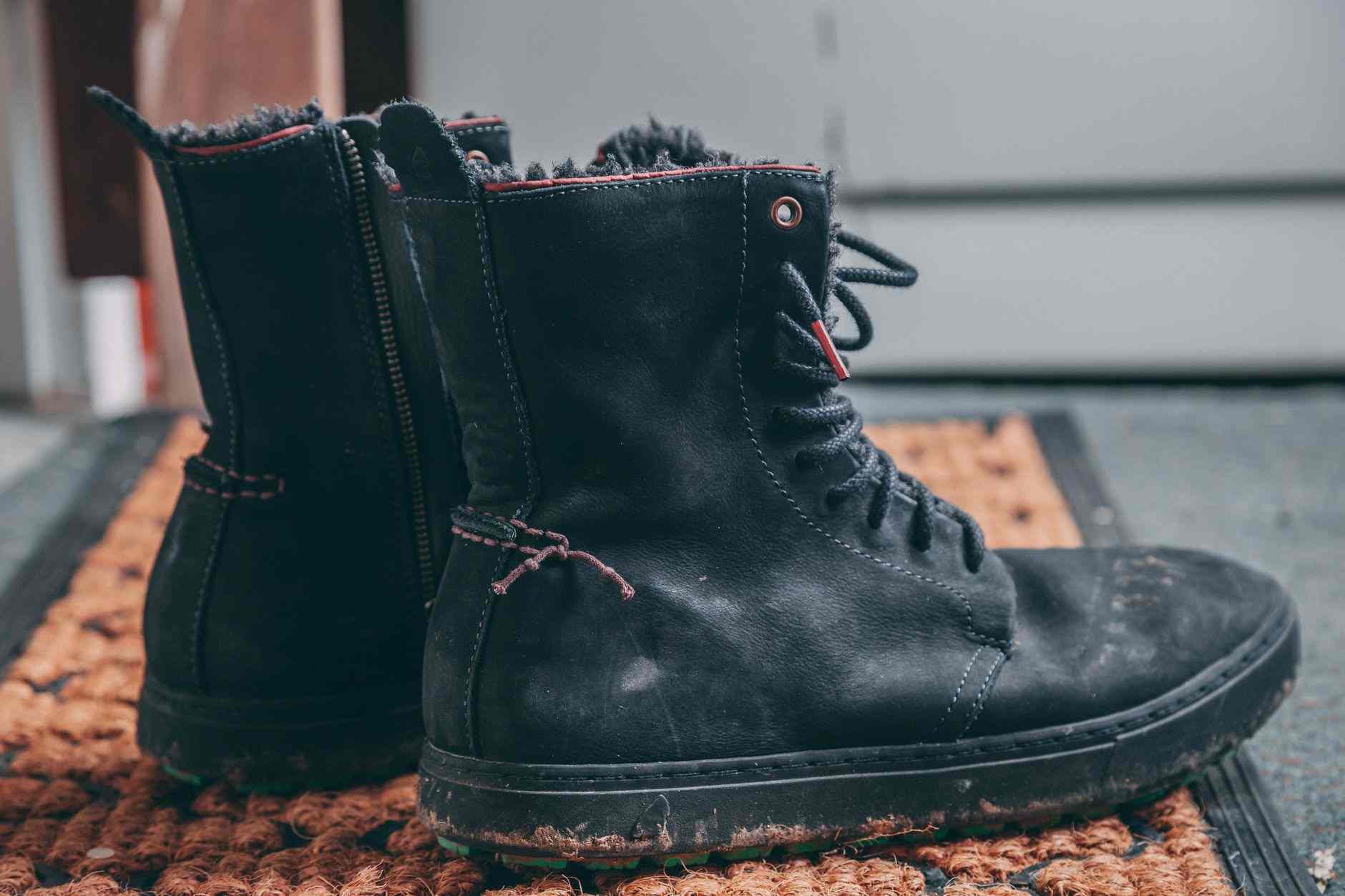
Autumn hits and suddenly every pair of trainers I own is wrong for the weather, which also means every pair of trainers my three kids own is wrong. I’m not even dramatic about it anymore. The leaves fall, the puddles form, and I’m back in Clarks on a Saturday morning being told my six-year-old is a 12.5F when the box says 13G. If you’ve ever stood in a shoe shop at 10am watching your toddler systematically remove socks that took you ten minutes to put on, you know this scene.
I’ve bought winter boots from Clarks, Timberland, Kickers and Geox for my kids over the last three autumns, mostly because I kept thinking the next brand would solve the half-size problem. What I’ve actually learned is that each brand has a personality: Clarks are honest about fit but boring, Timberland are warm but run a full size large, Kickers look great and age fast, Geox stay dry best but pinch at the toe. Here’s what each one does well, where they fail, and which pair I’d buy first if I had £60 to spend this half-term.
Clarks: The Fit Service Still Matters
Clarks remain the default for a reason, and that reason is the measuring service. The staff at my local branch actually use the gauge, actually quote half sizes, and actually tell you to come back in six weeks for the next measure. Nothing else matches that for kids under seven, where feet grow a shoe size every nine months and you’ll miss it if you’re guessing.
The winter boot range starts around £46 for the Rock Ride styles and tops out around £68 for the leather ankle boots. We’ve had the “Astrol Guide” style for two autumns on my eldest, and the sole wore evenly, the lining didn’t flatten, and the velcro held past the point my daughter had grown out of them.
The marketing says “the trusted name in children’s shoes”. In practice they fit boringly well. The styling is cautious, nobody at school will notice them, and that’s precisely what my seven-year-old wants. If your child is a half size and specifically a wide fit, Clarks will have it in stock. Nobody else reliably will.
Where Clarks Falls Short
The waterproofing is average. A proper puddle will wet the leather within 30 minutes, and the lining takes 48 hours to dry on a radiator. If your school-run route genuinely involves water, you’ll need to pair Clarks with a waterproof spray or accept the trade-off.
Timberland: Warm, Chunky and Runs a Full Size Large
Timberland junior boots are the ones your six-year-old will beg for because the big kids at the park wear them. The classic 6-inch premium style in junior sizes runs around £95 to £130, which is a serious outlay for a boot a child will outgrow in a year. The build quality justifies it if you’ve got a younger sibling in the pipeline to hand down to.
Fit runs a full size large consistently. My middle child’s actual Clarks size was 11F and the Timberland that fitted him was a UK 10. I tried a UK 11 Timberland first and he was swimming in it. Factor that into any online order, because returns are a weekend lost. The sole unit is the best of the four brands for pure cold weather, and the insulation genuinely keeps feet warm into November without a thick sock.
The marketing says “iconic yellow boot since 1973”. In practice it’s a very warm, very wide boot that photographs well but is overkill for a mild British autumn. If you live somewhere properly cold or do a lot of outdoor time, they earn their price. If your winter is mostly school run and park, you’re paying for aesthetic.
The Puddle Test
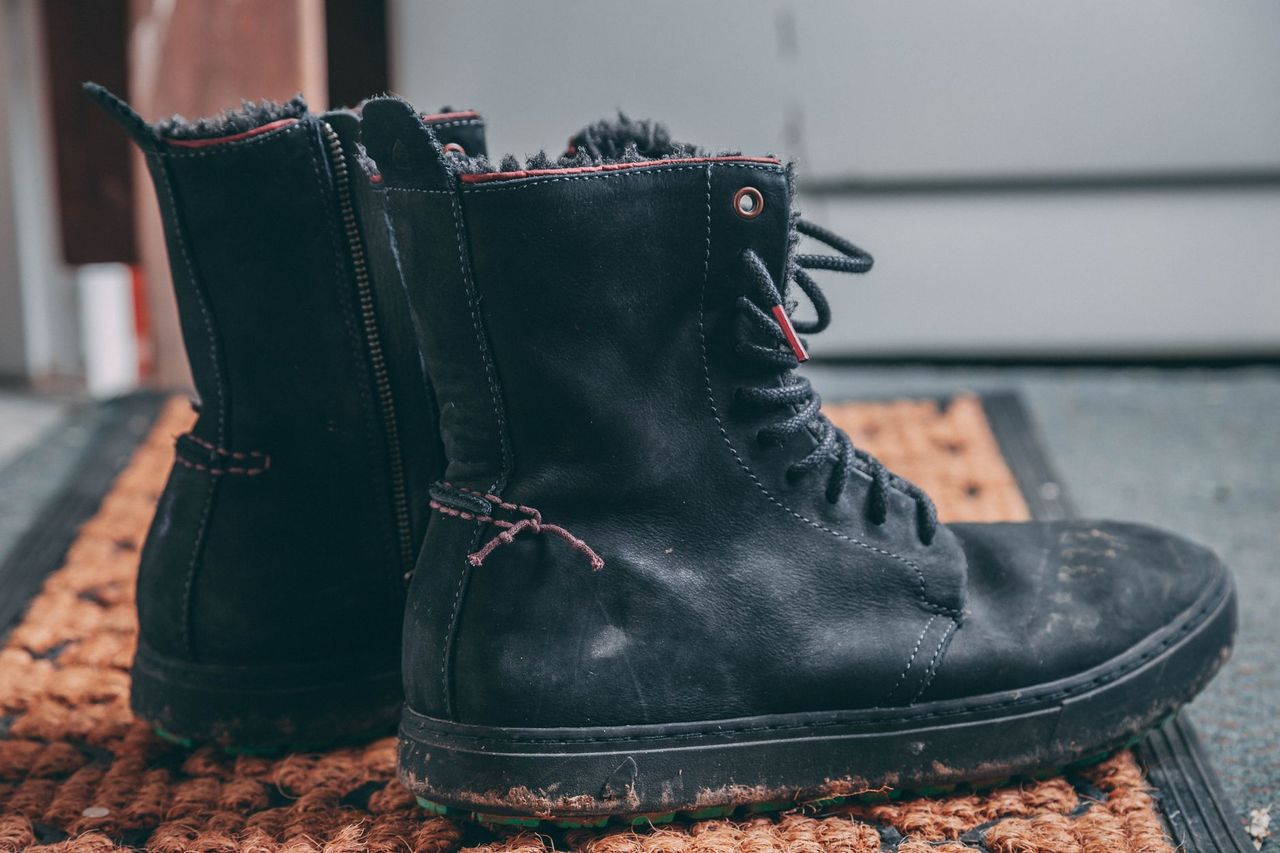
Timberland junior boots have a treated nubuck upper, not a membrane. They resist a surface splash well and shrug off wet grass, but a child who stamps in a 10cm puddle for 20 seconds will get damp socks eventually. The leather also marks easily if your child isn’t careful, and once scuffed they look loved rather than new.
Kickers: The Style Winner That Ages Fast
Kickers Kick Hi boots are the school-run status symbol in certain Year 3 playgrounds, and I’m not above admitting I bought a pair for my daughter after she asked for three straight weeks. The retail price sits around £68 to £75, and the leather colours in autumn conkers and bottle green are genuinely lovely in person.
Fit is close to Clarks, maybe a quarter size short. The toe box is narrower than Timberland and firmer than Geox, so if your child has a wide foot, size up. The velcro Kick Hi variant is the practical choice for under-sevens, the lace-up is for kids who can actually tie laces at the school gate without you kneeling in a puddle.
The marketing says “iconic since 1970”. In practice the leather softens beautifully for the first six weeks and then starts to crease deeply across the vamp. By March the boots look two years old, not six months. That’s a one-season boot in my experience, not a hand-me-down candidate.
Durability Reality
The sole unit is where Kickers lose me. The composition rubber wears unevenly if your child drags their feet (and mine does, on the walk home from school, every single day). After four months the left heel on my daughter’s pair had worn flat while the right still had tread. Timberland and Clarks both wore more evenly.
Geox: The Breathable Membrane That Actually Works
Geox is the Italian brand built around a perforated sole with a waterproof, breathable membrane, and the junior boot range starts around £55 and reaches £85 for the Amphibiox styles. The claim is that the sole lets sweat out but keeps rain in, and after two autumns I’ll back it. My son’s Amphibiox boots went through standing water on the school playing field and his socks stayed dry.
The marketing says “the shoe that breathes”. In practice they stay dry best of the four brands tested, by a measurable margin. The downside is the toe box runs narrow, and the ankle collar sits higher than Clarks, which caught my daughter’s calf for the first fortnight. She stopped complaining by week three, which is a long adjustment period for a six-year-old.
Styling splits the difference between Clarks and Timberland. They look sportier than Clarks, less chunky than Timberland. The lacing systems on the pricier Amphibiox models use a toggle and a hook, which my seven-year-old could manage alone by week two.
Where Geox Loses
Durability of the upper is middle of the pack. The nubuck scuffs similarly to Kickers, and the sole, while clever, has slightly less grip on wet metal (think school gate drain covers) than the Clarks waffle rubber. For pure puddle protection they win. For general school-run life they’re very good, not perfect.
The Half-Size Problem Across All Four
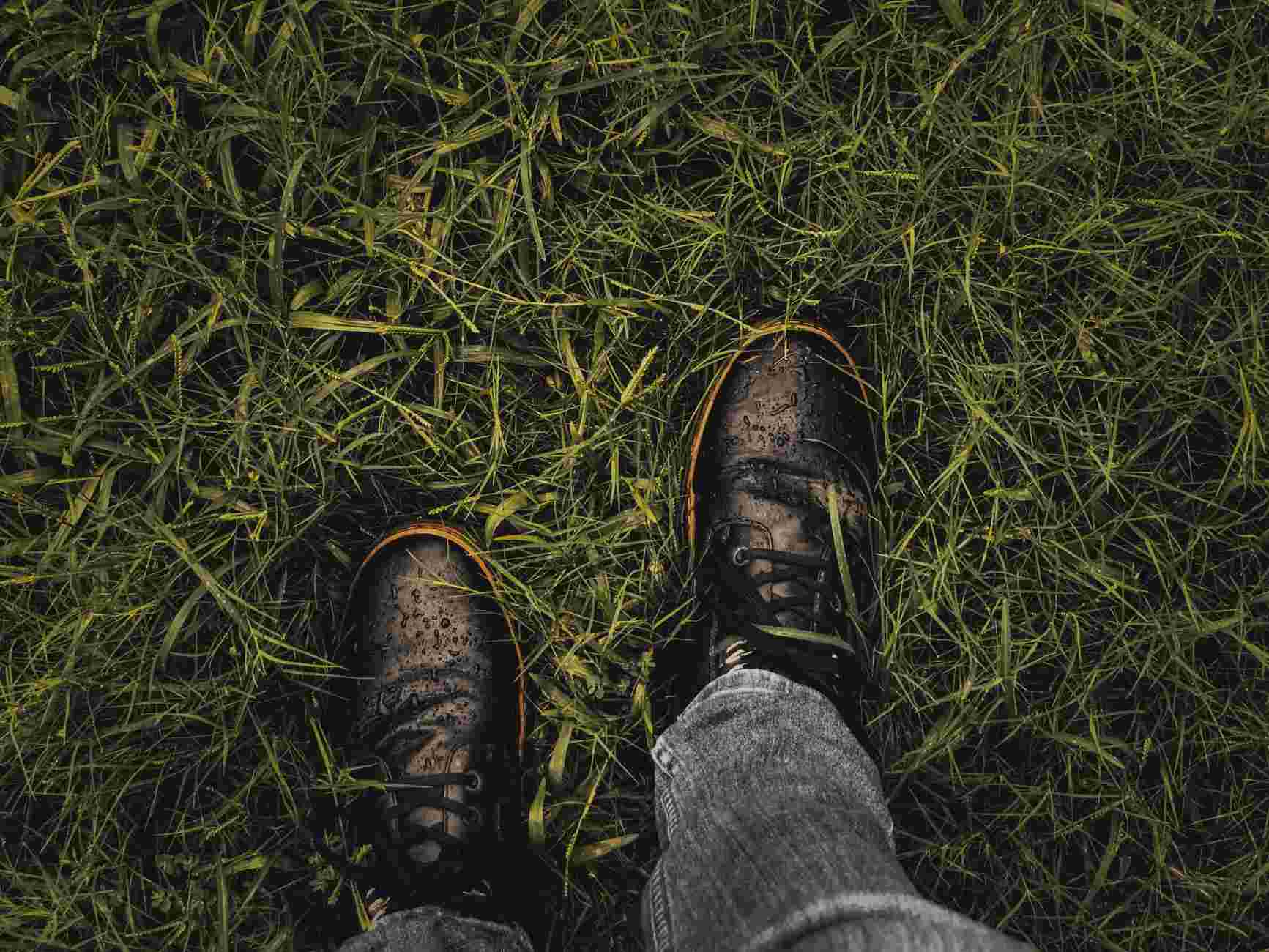
My kids are between full sizes right now, which is where sizing honesty matters. Clarks will sell you a half size in F, G or H fitting. Kickers do half sizes in UK junior but only in the ankle styles, not the full Kick Hi. Timberland does full UK sizes only, which forces you up or down. Geox does half sizes in the Amphibiox junior but not in the budget Jr. Baltic range.
If your child is a UK 12.5, your realistic options are Clarks or Geox Amphibiox. If your child is a UK 13 exactly, all four work. The half-size question actually narrows the field more than the brand loyalty question for most mums I know.
Side-by-Side on the Metrics That Matter
| Brand | Price Range | Half-Size Available | Puddle Resistance (10 min) | Expected Life |
|---|---|---|---|---|
| Clarks | £46 to £68 | Yes, F/G/H widths | Fair | 10 to 12 months |
| Timberland | £95 to £130 | No, full sizes only | Good | 14 to 18 months |
| Kickers | £68 to £75 | Partial, by style | Fair | 7 to 9 months |
| Geox Amphibiox | £65 to £85 | Yes, Amphibiox only | Excellent | 11 to 13 months |
Do’s and Don’ts
| Do's | Don'ts |
|---|---|
| Do get kids measured every eight weeks in autumn | Don't buy online without checking brand sizing notes |
| Do apply a waterproof spray before first wear | Don't rely on nubuck leather to repel puddles alone |
| Do size Timberland junior down by a full UK size | Don't assume Timberland fits like Clarks |
| Do choose velcro for under-sevens on school runs | Don't let laces defeat you at 8:15am |
| Do rotate two pairs if your child wears daily | Don't leave wet boots next to a radiator overnight |
| Do stuff damp boots with newspaper to dry | Don't put boots in the tumble dryer |
| Do keep the shoebox for the receipt and returns | Don't throw out the Clarks fit sheet |
| Do check the sole wear monthly | Don't ignore uneven wear, it's a gait signal |
| Do hand down between siblings where fit allows | Don't force a size, feet remember |
| Do pair with wool-blend socks in October | Don't use cotton socks on wet days |
Frequently Asked Questions
What’s the best boot for a wide foot under age 7
Clarks G or H fitting, hands down. Nobody else does width classifications as reliably at this age.
Are Timberland junior boots worth the £120
Only if you’ve got a younger sibling to hand down to or you live somewhere genuinely cold. For an average UK autumn, you’re over-spending on insulation you won’t need.
Can Geox Amphibiox really keep feet dry
In my testing, yes, through a 20 minute school playing field crossing with standing water. The membrane does what it claims.
Why do Kickers age faster than the others
Softer leather and a composition sole that wears unevenly when kids scuff their feet. Beautiful at six weeks, tired at six months.
What’s the right winter sock weight
A medium-weight wool blend, around 60% wool content. Pure cotton stays wet. Pure synthetic sweats.
Should I buy a size up for growing room
Half a size up max. A full size up means heel slippage, blisters, and the boot never fitting properly until it’s already too small.
Which brand holds resale value for pre-loved sites
Timberland by a mile. Clarks second if the condition is excellent. Kickers lose value fast once the leather creases.
Do any of these come in vegan options
Clarks has synthetic-upper options in the Rock Ride range. Geox has nubuck-free Amphibiox variants seasonally. Timberland and Kickers remain primarily leather for the classic styles.