
Recovery tools tested for the constant back ache of carrying, feeding and lifting. Foam rollers, massage guns, heat and what actually fixes the cause, US and UK pricing.
The ache started somewhere around month four and never entirely left. Between the shoulder blades, slightly worse on the right, worst in the evening. I described it to a friend as feeling like someone had left a coat hanger in my upper back, which she found funny and which was also the most accurate description I could manage.
It took me an embarrassingly long time to connect it to the obvious. I was spending several hours a day looking down at a baby, several more carrying one on my right hip, and a fair amount of time hunched over a car seat that weighed as much as a small suitcase. My back was not mysteriously failing. It was responding entirely reasonably to what I was asking of it. That reframe is the most useful thing in this article, because it determines what you should buy. Recovery tools manage symptoms extremely well. They do not fix a cause, and knowing which one you are addressing saves both money and disappointment.
Where the Pain Actually Comes From

Four patterns account for almost all of it, and each one responds to something different.
Upper back and between the shoulder blades. Caused by sustained forward head posture from feeding, looking down at a baby, and phone use. The muscles between the shoulder blades are not tight so much as overstretched and fatigued from holding a position for hours.
One sided lower back and hip. Caused by carrying a child on the same hip every time, which almost everyone does without noticing. This creates real asymmetry in the muscles that stabilize the pelvis.
General lower back. Caused by a combination of repeated lifting from a bent position, weakened deep core and glute function after pregnancy, and long periods sitting while feeding.

Neck and base of skull. Usually the same forward head posture as the upper back, plus the tension that accompanies broken sleep.
The important point. Tight muscles are frequently a symptom of weak or overworked ones rather than the primary problem. Rolling out a tight upper back gives real relief and does not stop the pattern recurring tomorrow, because the pattern is caused by what you spend your day doing. Both parts matter, so treat the symptom and address the cause.
The Tools, Ranked by Value

A firm massage ball, $8 to $20 or £6 to £16. The best value item by a distance. A lacrosse ball or dedicated massage ball against a wall lets you reach exactly the spot between your shoulder blades that nothing else reaches. It costs almost nothing, fits in a bag, and produces more targeted relief for upper back tension than tools costing twenty times as much. Start here.
A foam roller, $25 to $50 or £20 to £40. Excellent for the upper back, mid back extension over the roller, quads, glutes and hamstrings. Get a medium density one, because the very firm textured versions are genuinely unpleasant for beginners and unused tools help nobody. The single most useful movement is lying across it perpendicular at the mid back and gently extending backward, which directly counteracts a day spent curled forward.
A heat pack or wheat bag, $15 to $35 or £10 to £28. Underrated and cheap. Heat is genuinely effective for muscular tension and stiffness, increases blood flow, and is pleasant enough that you will actually use it. Microwavable wheat bags shaped for the neck and shoulders are the practical pick. Use heat for chronic muscular ache, and ice for acute injury and inflammation within the first day or two.
A massage gun, $80 to $300 or £60 to £250. Effective, satisfying and considerably more expensive than the alternatives. The mid range models around a hundred to a hundred and fifty dollars perform nearly as well as the premium ones for home use. Two honest caveats. They are loud enough to wake a sleeping child in the next room, and there is nothing they do that a massage ball and a foam roller cannot approximate for a tenth of the price. Buy one if you will use it, not because it looks like the serious option.
An acupressure mat, $25 to $50 or £20 to £40. Divisive and cheap enough to be worth trying. Lying on one for fifteen minutes produces a strong warming sensation and many people find it genuinely relaxing for upper back tension. The evidence base is thin, the cost is low, and the people who like them tend to like them a lot.
A supportive pillow for feeding and sleeping, $30 to $70 or £25 to £55. Not marketed as a recovery tool and arguably the most preventative item on this list. A proper feeding pillow that brings the baby up to you rather than requiring you to curl down over them removes hours of the posture that causes the problem.
| Tool | Price (US) | Price (UK) | Best for | Quiet | Verdict |
|---|---|---|---|---|---|
| Firm massage ball | $8 to $20 | £6 to £16 | Targeted upper back knots | Yes | Buy first, best value |
| Foam roller, medium density | $25 to $50 | £20 to £40 | Mid back extension, legs, glutes | Yes | Buy second |
| Microwavable heat pack | $15 to $35 | £10 to £28 | Chronic muscular stiffness | Yes | Cheap and genuinely effective |
| Massage gun | $80 to $300 | £60 to £250 | Larger muscle groups, legs and glutes | No | Good, not necessary |
| Acupressure mat | $25 to $50 | £20 to £40 | General upper back relaxation | Yes | Cheap enough to try |
| Feeding support pillow | $30 to $70 | £25 to £55 | Preventing the posture entirely | Yes | Most preventative purchase |
| Resistance bands | $15 to $30 | £12 to £25 | Strengthening the cause | Yes | The actual fix |
| Physiotherapy session | $100 to $200 | £45 to £80 | Diagnosis and a specific plan | Yes | Highest value if pain persists |
The Five Minute Routine That Made the Difference
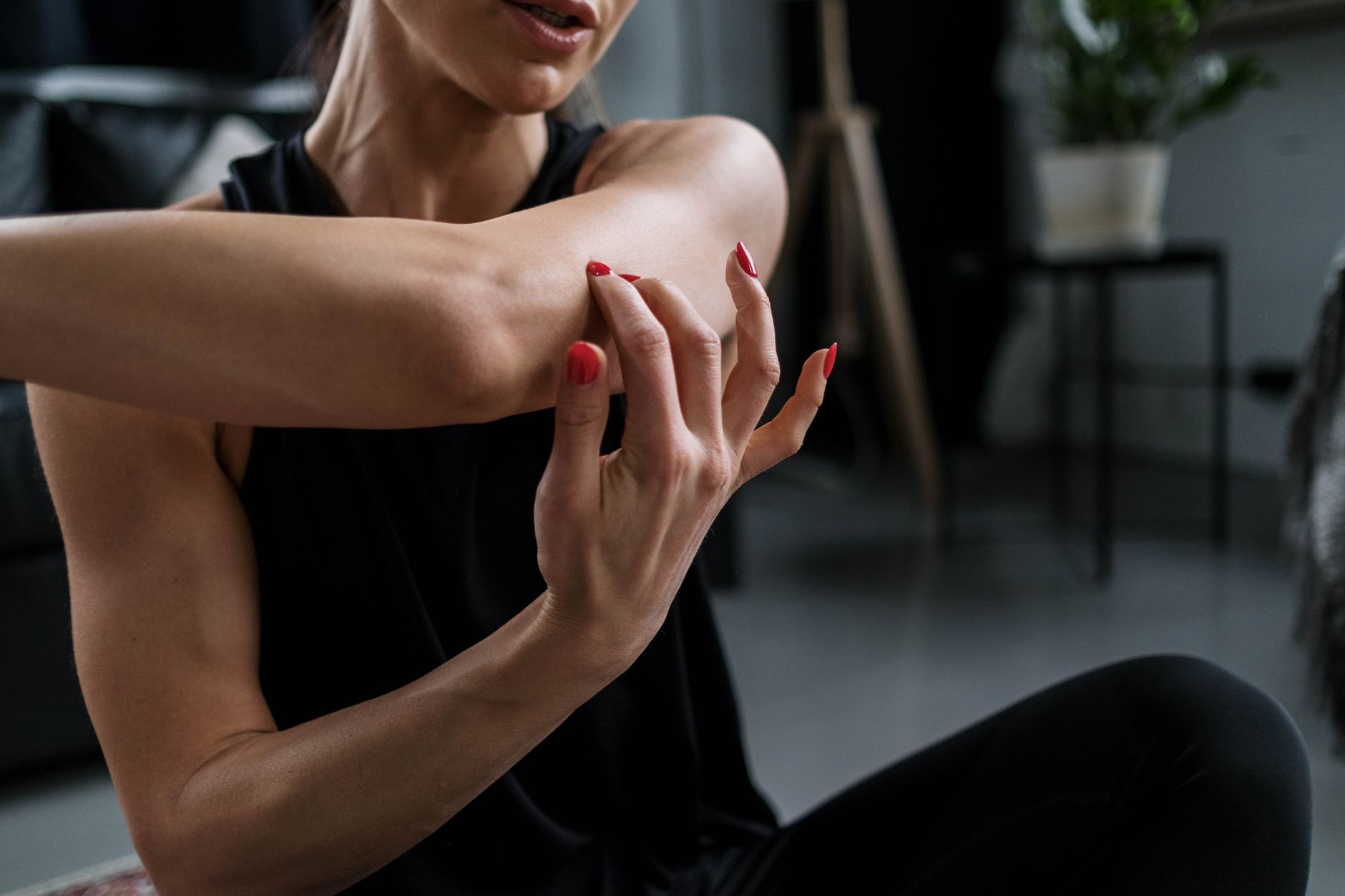
Done in the evening, most days. It takes five minutes and it is the most consistently useful thing I have found.
Massage ball against the wall, ninety seconds. Stand with the ball between your shoulder blade and spine, lean into the wall, and move slowly until you find the spot that makes you exhale. Hold there breathing normally for thirty seconds rather than rolling frantically. Swap sides.
Foam roller thoracic extension, ninety seconds. Lie with the roller across your mid back, perpendicular to your spine, hands supporting your head, and gently arch backward over it. Move the roller up an inch and repeat three or four times. This directly reverses a day spent curled forward and it is the movement most people find gives immediate relief.
Doorway chest stretch, sixty seconds. Forearm on a door frame, step through gently, thirty seconds per side. Tight chest muscles are half the reason your upper back aches.
Band pull aparts, sixty seconds. Hold a resistance band at shoulder height and pull it apart, squeezing the shoulder blades together, fifteen to twenty repetitions. This is the strengthening half and it is what stops the ache returning as quickly.
The last one matters most and is the one people skip because it does not feel like relief. Rolling gives you an evening of comfort. Strengthening changes next month.
The Things That Cost Nothing and Help More

Switch hips. Consciously alternate which side you carry on. It will feel awkward and weak on the non dominant side, which is precisely the point.
Raise the baby, do not lower yourself. Use a pillow when feeding so the baby comes up to chest height rather than you curling down. This is hours a day of posture.
Lift with your legs from the car seat. Cars are designed badly for this. Get as close as you can, brace, and use your legs rather than reaching and twisting from a bent spine.
Set the phone higher. Much of the neck pain attributed to feeding is actually from looking down at a phone while feeding. Bring it up to eye level.
Move every hour. Any position held for long enough becomes the problem, including good ones. Standing up and doing thirty seconds of shoulder rolls beats any tool on this list.
When to Stop Buying Tools and See Someone
Recovery tools are for muscular ache and stiffness. Some things need proper assessment rather than a foam roller.
See a doctor or physiotherapist if you have pain that radiates down an arm or leg, any numbness, tingling or weakness, pain that wakes you at night consistently, pain following a specific injury or fall, or back pain that has not improved at all after several weeks of sensible self management.
Also worth knowing, persistent lower back and pelvic pain after birth is sometimes related to pelvic girdle issues or to core and pelvic floor function rather than to the back muscles themselves, and that responds to specific rehabilitation rather than to massage. A pelvic health physiotherapist is the right person for that.
One physiotherapy session that identifies what is actually happening is worth more than several hundred dollars of gadgets, and it is the recommendation I would give above everything else in this article if the pain has been going on for months.
If You Are Shopping in the UK
Decathlon covers foam rollers, massage balls and resistance bands at the low end of the price ranges above and the quality is entirely adequate for home use. Boots and larger supermarkets carry heat packs and wheat bags cheaply, and Aldi and Lidl run recovery and fitness ranges seasonally where a massage gun at forty to sixty pounds is common and performs reasonably.
For massage guns specifically, the mid range brands widely available in the UK at £60 to £120 do the job perfectly well, and paying premium prices buys quieter operation and better battery life rather than meaningfully better results.
On professional help, NHS physiotherapy is available for back pain in most areas with self referral possible in many trusts, though waiting times vary considerably. Private physiotherapy in the UK typically runs £45 to £80 per session outside London, which compares favourably with the US and makes a single diagnostic session a very reasonable purchase. For pelvic girdle pain or postnatal specific issues, ask specifically for a pelvic health physiotherapist rather than a general musculoskeletal one.
Do’s and Don’ts: Managing Constant Back Ache
| Do's | Don'ts | |
|---|---|---|
| 1 | Buy a massage ball before anything expensive | Start with a three hundred dollar massage gun |
| 2 | Choose a medium density foam roller | Buy the firmest textured roller as a beginner |
| 3 | Add strengthening work, not just release work | Roll every evening and wonder why it always returns |
| 4 | Alternate the hip you carry your child on | Carry on the same side every single time |
| 5 | Use a pillow to bring the baby up when feeding | Curl your spine down over the baby for an hour |
| 6 | Hold on a tender spot and breathe for thirty seconds | Roll rapidly back and forth over a painful area |
| 7 | Use heat for chronic muscular stiffness | Use heat on an acute injury in the first day or two |
| 8 | Raise your phone to eye level while feeding | Spend feeds looking steeply downward at a screen |
| 9 | Move position at least once an hour | Hold any single posture for hours, even a good one |
| 10 | See a physiotherapist if pain persists for weeks | Keep buying tools for a problem that needs diagnosis |
| 11 | Get assessed for numbness, tingling or radiating pain | Self treat symptoms that travel down an arm or leg |
| 12 | Ask for pelvic health physio for postnatal pelvic pain | Assume all back pain is a back muscle problem |
FAQs
What causes constant upper back pain in new mothers?
Sustained forward head and rounded shoulder posture is the main cause. Feeding, looking down at a baby, lifting from car seats and phone use all place the head forward of the shoulders for hours a day, and the muscles between the shoulder blades fatigue from holding that position. The sensation is usually described as tightness, but the muscles are typically overstretched and overworked rather than short. That is why stretching alone gives temporary relief and strengthening work gives lasting change.
Is a massage gun worth the money?
It is effective but not necessary. Massage guns work well on larger muscle groups such as glutes, quads and calves, and they are satisfying to use. However, a firm massage ball and a foam roller together cost under fifty dollars and achieve most of the same outcomes, particularly for the upper back where a ball against a wall is actually more precise than a gun. They are also loud enough to wake a sleeping child. Buy one if you will genuinely use it, and consider a mid range model rather than a premium one.
Should I use heat or ice for back pain?
Use heat for chronic muscular tension, stiffness and general ache, which is what most parental back pain is. Heat increases blood flow to the area and helps muscles relax. Use ice for acute injury, swelling and inflammation, generally within the first day or two after something specific has happened. If you are unsure and the pain is a long standing ache rather than a sudden injury, heat is the sensible default and a microwavable wheat bag is a cheap way to get it.
How do I stop back pain from carrying my child?
The most effective change is alternating sides, which almost nobody does naturally. Consciously carry on your non dominant hip for half the time, even though it will feel weaker and more awkward at first. Beyond that, strengthening your glutes and the muscles between your shoulder blades gives your body more capacity for the load, and using a well fitted carrier that distributes weight across both shoulders and your hips is dramatically better than hip carrying for longer periods.
When should I see a doctor about back pain?
Seek assessment if you have pain radiating down an arm or leg, any numbness, tingling or weakness, pain that consistently wakes you at night, pain following a fall or specific injury, or pain that has not improved at all after several weeks of sensible self management. Also see someone if you have persistent lower back or pelvic pain after giving birth, since that may relate to pelvic girdle or pelvic floor function and needs specific rehabilitation rather than massage.
Do foam rollers actually work?
For the relief they promise, yes. Foam rolling temporarily reduces the sensation of muscle tightness and improves short term range of motion, and thoracic extension over a roller directly counteracts the forward curled posture that causes upper back ache. What it does not do is change the underlying pattern, so the relief lasts hours rather than weeks unless you also address the cause through strengthening and posture changes. Used together, both parts work well.
What is the cheapest thing that actually helps?
A firm massage ball at under twenty dollars, used against a wall on the spot between your shoulder blade and spine. It is more precise than any larger tool, requires no space, travels easily and produces genuine relief. Second cheapest is a resistance band for band pull aparts, which is the strengthening work that stops the ache returning. Both together cost less than forty dollars and outperform most of the expensive options for this specific problem.
Can back pain after pregnancy be permanent?
It does not have to be, and persistent pain months after birth is worth investigating rather than accepting. Common contributors include reduced deep core and glute function, pelvic girdle issues, and simply the sustained physical demands of caring for a small child, all of which respond to targeted rehabilitation. A physiotherapy assessment will identify which factors apply to you and give you specific work to do, which is a far better use of money than continuing to manage symptoms indefinitely with tools.
You Might Also Like