Winter city breaks that genuinely work with children, within a short flight. Where to go from the UK and the US, how to plan a cold weather day and what to pack.
We took our children to a beautiful European city one February and spent most of the trip either cold or indoors queuing. It was not the city’s fault. It was mine, for planning a summer itinerary and executing it in four degrees with a five year old whose hands were never warm enough and whose tolerance for cathedrals turned out to be about eleven minutes.
Winter city breaks with children are genuinely excellent, and they are a completely different exercise from summer ones. The plan has to be built around indoor anchors, short outdoor bursts, early darkness and the fact that cold makes small children miserable faster than anything else. Get that right and you get the best version of a city, uncrowded and atmospheric, at half the summer price. Here is how, and where.
The Rules of a Winter City Break With Children

Build the day around two indoor anchors. One in the morning, one in the afternoon, each somewhere warm you could happily spend ninety minutes. Museum, aquarium, indoor market, swimming pool, science centre. Everything outdoors happens between them, in short bursts.
Accept early darkness and use it. In northern Europe in December, it is dark by four. Rather than fighting that, plan something atmospheric for the dark hours, lights, markets, a tram ride, and treat late afternoon as evening.
Stay central and pay for it. In winter the calculation changes completely. Being able to return to the apartment for an hour when someone is cold and fractious is worth more than any saving from staying twenty minutes out.
Choose an apartment over a hotel room. Somewhere to make hot chocolate, dry wet gloves and let children be loud without apology.

Plan half of what you think. Two things a day. Cold slows everyone down and children stop functioning much sooner than in warm weather.
Book a swimming pool. Almost every European city has excellent municipal pools, often with slides and warm water, and they are the single most reliable rescue plan for a bad weather day.
Where to Go From the UK
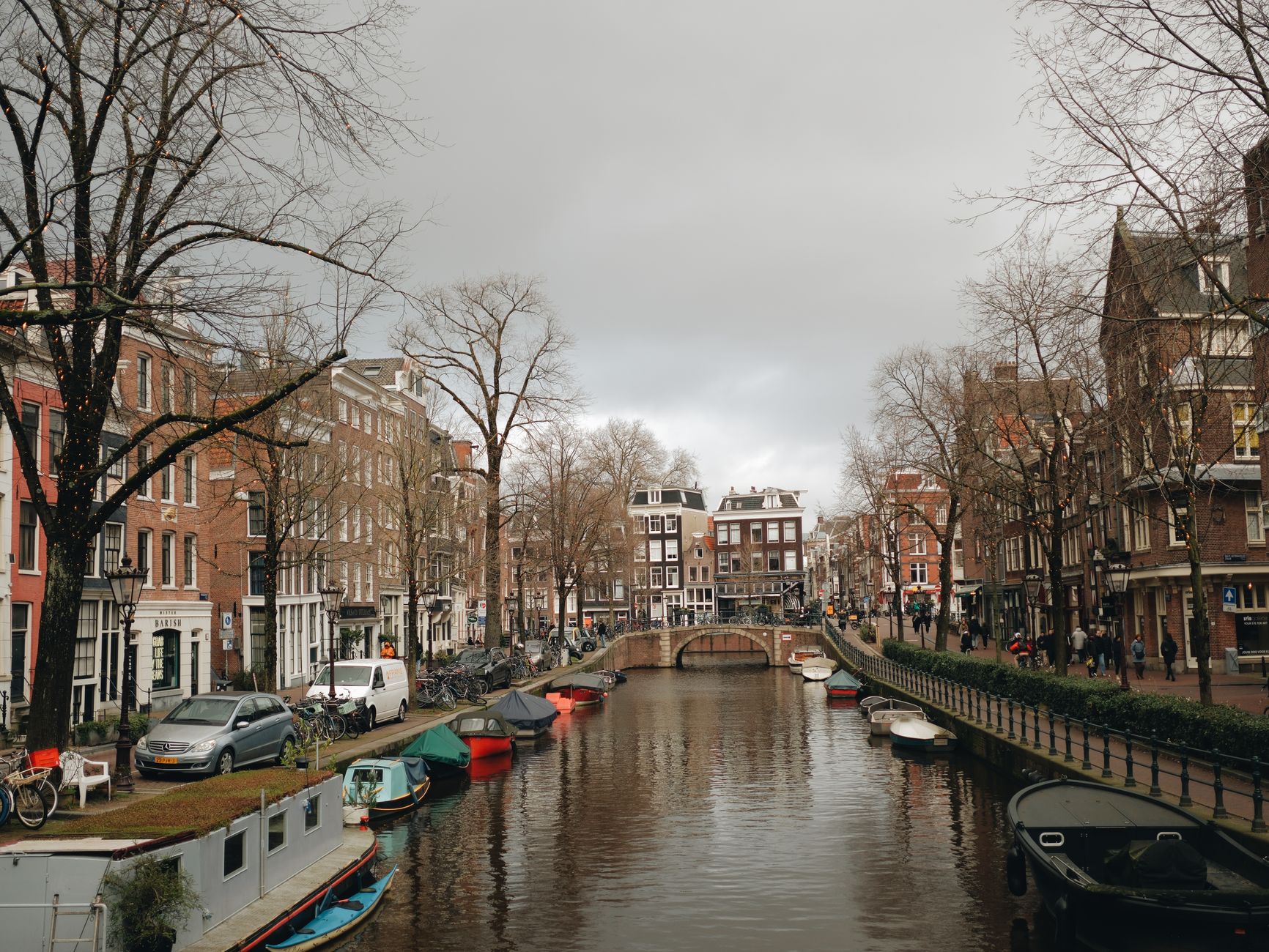
Amsterdam, one hour. Excellent for families, walkable and flat, and the canal boats work as well in winter as summer with the covered ones being genuinely warm. NEMO science museum is a superb indoor anchor for the whole day if needed. Trains from London mean no flight at all if you prefer.
Copenhagen, under two hours. Expensive and outstanding for children. Tivoli Gardens opens for a winter season with lights, and the city is built for family life in a way that is immediately obvious.
Bruges and Brussels, under two hours or by train. Compact, walkable, superb Christmas markets, excellent chocolate, and Brussels has strong indoor options for wet days.
Berlin, under two hours. Cheaper than most Western European capitals, enormous number of indoor attractions, excellent public transport and a strong Christmas market scene.
Dublin and Edinburgh, one hour or by train. No language barrier, short journey, lots of indoor options, and Edinburgh in particular is atmospheric in winter.
Vienna, just over two hours. Grand, well organised, superb museums and one of the best Christmas market cities in Europe.
Lisbon or Seville, two and a half hours. For families who would rather escape the cold than lean into it. Mild rather than warm in winter, considerably cheaper than summer, and pleasant for walking.
Where to Go From the US

Within a short flight, the strongest winter family city options are Montreal and Quebec City for a genuine winter experience with excellent indoor infrastructure and underground networks in Montreal specifically designed around cold. Both feel like a trip abroad with a short flight.
Chicago has an extraordinary concentration of family attractions in a small area, most of them indoors, including several world class museums and an aquarium, all connected by transit.
Washington DC offers a large number of free museums, which is a considerable advantage on a trip where you may need three indoor options in a day rather than one.
Boston and Philadelphia are compact, walkable, rich in history presented well for children, and full of indoor options.
San Diego and Charleston are the choices if the goal is escaping cold rather than embracing it, both mild in winter and considerably cheaper than in summer.
Mexico City is worth naming for families willing to fly slightly further, with excellent museums, mild winter weather and very good value.
| Destination | From | Journey time | Winter character | Indoor options | Cost level |
|---|---|---|---|---|---|
| Amsterdam | UK | 1 hour or train | Cold, atmospheric, flat and walkable | Excellent | Moderate to high |
| Copenhagen | UK | Under 2 hours | Cold, lights, very family oriented | Excellent | High |
| Bruges and Brussels | UK | Under 2 hours or train | Compact, markets, chocolate | Good | Moderate |
| Berlin | UK | Under 2 hours | Cold, cheap, huge choice | Excellent | Low to moderate |
| Vienna | UK | Just over 2 hours | Grand, markets, well organised | Excellent | Moderate |
| Lisbon or Seville | UK | 2.5 hours | Mild escape from cold | Good | Low to moderate |
| Montreal and Quebec City | US | 1 to 2 hours | Proper winter, built for it | Excellent | Moderate |
| Chicago | US | Domestic | Very cold, superb indoor density | Outstanding | Moderate to high |
| Washington DC | US | Domestic | Cold, many free museums | Outstanding | Moderate |
| San Diego or Charleston | US | Domestic | Mild escape from cold | Good | Moderate |
Planning a Cold Weather Day That Works
Late start. There is no advantage to being out at eight in the dark and cold. Breakfast slowly, leave at half past nine.
Morning anchor, ninety minutes to two hours indoors. The main attraction of the day, done when everyone is fresh.
Lunch somewhere warm and sitting down. Not a sandwich on a bench. This is the recharge point of the day and skipping it is the most common error.
One outdoor thing, forty five minutes maximum. A market, a park, a walk along a river, a viewpoint. Long enough to see it, short enough that nobody freezes.
Back to the apartment for an hour. Warm up, dry gloves, let everyone stop. This hour is what makes the evening possible.
Something in the dark. Lights, a market, a tram or boat ride, dinner early. Small children find lit cities genuinely magical and it costs nothing.
That is six components and it is a full day. Anyone attempting more than that in winter with children is planning for a family that does not exist.
What to Pack

Layers rather than one thick coat, since indoor heating in European buildings is often intense and a child in a single heavy coat overheats indoors and then goes back out damp.
Waterproof outer layer, because northern European winter is wet more often than snowy.
Mittens rather than gloves for younger children, warmer and easier, plus a spare pair since one will be lost.
Hats that cover the ears, and a neck warmer rather than a scarf, which is safer and stays on.
Waterproof boots with grip. Wet cold feet end a day faster than anything else.
A thermos. Hot chocolate on a cold street is worth more than any attraction.
Swimming things, for the pool rescue plan.
A change of clothes in the day bag for anyone under about six.
If You Are Booking From the UK
Winter is by far the cheapest time for European city breaks outside the Christmas market peak of late November to late December, which carries its own premium. January and February offer very low flight and accommodation prices, and cities are pleasantly empty.
Rail options are worth considering seriously with children, since trains from London reach Paris, Brussels, Amsterdam and beyond without airport security, luggage restrictions or the misery of an early morning flight with a toddler. The onward European network makes multi city trips straightforward.
Half term in February pushes prices up sharply, as it does for every family holiday. The weeks either side are dramatically cheaper.
Check passport validity and entry requirements before booking, since rules for British travellers to Europe have changed in recent years and continue to evolve. Check current requirements shortly before travel rather than relying on how it worked previously.
Do’s and Don’ts: Winter City Breaks With Children
| Do's | Don'ts | |
|---|---|---|
| 1 | Build each day around two indoor anchors | Plan a walking itinerary and hope for good weather |
| 2 | Stay central even if it costs more | Save money on a hotel forty minutes from everything |
| 3 | Book an apartment with a kitchen | Put a family in one hotel room with dark at four |
| 4 | Plan two activities a day maximum | Attempt a summer itinerary in winter conditions |
| 5 | Return to the apartment mid afternoon to warm up | Push through until dinner with cold children |
| 6 | Use the early darkness for lights and markets | Treat four o'clock as the end of the day |
| 7 | Find the local swimming pool as a backup plan | Have no plan for a genuinely awful weather day |
| 8 | Dress in layers for intense indoor heating | Put a child in one heavy coat all day |
| 9 | Pack mittens, spare mittens and waterproof boots | Underestimate how fast wet cold hands end a day |
| 10 | Sit down somewhere warm for lunch | Eat a sandwich on a bench in December |
| 11 | Travel in January or February for the lowest prices | Book Christmas market peak or half term at full price |
| 12 | Consider rail rather than flying where possible | Take a five year old through a 5am airport for a one hour flight |
FAQs
Are winter city breaks a good idea with young children?
They can be excellent, provided the itinerary is built for the conditions rather than adapted from a summer plan. Cities are far less crowded, prices outside the Christmas peak are considerably lower, and lit streets and markets are genuinely magical for young children. The requirement is planning around indoor anchors, short outdoor bursts, early darkness and frequent warming up, and doing roughly half of what you would attempt in summer.
Which European cities are best for families in winter?
Amsterdam, Copenhagen, Berlin, Vienna and Bruges all combine short flights from the UK with strong indoor attractions and atmospheric winter character. Berlin offers the best value with an enormous range of indoor options. Copenhagen is the most explicitly family oriented city but also the most expensive. If the goal is escaping the cold rather than embracing it, Lisbon and Seville are mild in winter and considerably cheaper than in summer.
How do I plan a day in a cold city with kids?
Start late, around half past nine. Do the main indoor attraction in the morning while everyone is fresh, for ninety minutes to two hours. Sit down somewhere warm for lunch rather than eating outdoors. Do one outdoor activity of no more than forty five minutes. Return to your accommodation for an hour to warm up and dry off. Then go out again for something atmospheric in the dark, such as lights or a market, with an early dinner. That is a full day in winter.
What should children wear for a winter city break?
Layers rather than one thick coat, since European indoor heating is often intense and a child in a single heavy coat will overheat inside and then go back out damp. A waterproof outer layer matters more than a snow specific one, since northern European winters are wet more often than snowy. Mittens rather than gloves for younger children, plus a spare pair, a hat covering the ears, a neck warmer rather than a scarf, and waterproof boots with grip.
What is the cheapest time for a family city break in Europe?
January and February, excluding half term weeks, are by far the cheapest, with both flights and accommodation at their lowest and cities pleasantly empty. Late November to late December carries a premium because of Christmas markets. February half term pushes prices sharply higher for a fortnight. Booking the weeks immediately before or after a school holiday period rather than during it typically saves a substantial proportion of the total cost.
Is travelling by train better than flying with children?
Often yes, particularly for shorter distances from the UK into Europe. Trains remove airport security queues, strict luggage restrictions and early morning departures, and children can move around, which makes a two hour journey considerably easier than a one hour flight with three hours of airport either side. Trains also arrive in city centres rather than at distant airports. The trade off is journey length and sometimes cost, which is worth comparing case by case.
What do we do if the weather is genuinely awful?
Find the local swimming pool, which is the most reliable rescue plan in almost any European city and frequently better than anything comparable at home, with slides and warm water at low cost. Beyond that, science museums, aquariums, indoor markets, libraries with children’s sections and shopping centres with play areas all work. It is worth identifying two of these before you travel so you are not searching on a phone in the rain with an unhappy child.
How many days should a winter city break be?
Three or four nights is generally the sweet spot with children. Two nights leaves you with essentially one usable day once travel is accounted for, which is not enough to justify the disruption. Beyond four nights, the limited daylight and the need for frequent indoor breaks mean most families run out of things they can comfortably do, and the cost rises without proportional benefit. Three nights with two activities a day is a well judged trip.
You Might Also Like