The first firework of the evening will almost always arrive before you expect it. You will be tying a hood on a two-year-old, trying to hold a flask steady, and the sky will light up over the roof of the next street. The toddler will cry. The flask will tip. The family trip to see the display, which you planned for weeks, is now operating in crisis mode six minutes in. This happens every November in gardens across Britain and it is almost entirely preventable.
Bonfire Night with children under five is a very different event from the one your friends without kids will attend. The question is not whether to see the big community display but how to build a scaled-down version at home or in a nearby park that your child can enjoy without being frightened. This guide covers which sparkler brands meet UK safety standards, what warm food travels well in a Thermos, and how to time the evening so a toddler is still awake and happy by the time the garden fire pit goes on.
The UK sparkler and firework landscape in 2026
Standard Fireworks, Black Cat and Astra are the three dominant family-safe firework brands in UK garden centres and supermarkets through October and November. Allthree carry CE and UKCA markings; look for the EN 15947 standard printed on the box, which categorises the firework by distance and noise level. For gardens with children present, Category F1 is the only genuinely safe choice, as these are designed to be used at a minimum one-metre distance.
Sparklers are a separate conversation. Standard Fireworks and Astra both sell sparkler packs around £3 to £6, with wire lengths of 18cm (small), 25cm (medium) or 45cm (long). For children aged five and up, the 25cm length is the sensible choice because it burns for 45 to 60 seconds and gives enough wire to grip through a glove without heat transfer. Children under five should not hold sparklers directly. The guidance from the UK Fireworks Review is clear on this and worth following.
Supermarkets have thinned their firework ranges in recent years. Sainsbury’s and Tesco carry small Category F1 selection boxes from mid-October at £10 to £25. Argos and Smyths run larger ranges earlier. Local garden centres and dedicated firework shops have better stock and better advice; staff at a specialist shop will tell you which fountains and Catherine wheels are suitable for a small garden with children watching from a safe distance.
Keeping warm: Thermos flasks and the right drinks
A proper 1 litre vacuum flask will keep hot drinks genuinely hot for eight hours and lukewarm for twelve. Thermos itself still makes the benchmark; the Stainless King 1.2L sits at around £35 at John Lewis and holds four mugs of hot chocolate or soup. Thermos‘s Light & Compact 500ml at £22 is better for one adult and one child. Lakeland and Argos stock cheaper alternatives from £14 but the insulation is noticeably weaker, and a flask that lets the drink cool to tepid by 7pm defeats the point.
For children, the best drink is a lower-sugar hot chocolate rather than coffee or heavily spiced mulled drinks. Cadbury’s low-sugar instant hot chocolate at £3 a tin, mixed with semi-skimmed milk, delivers a drink that stays palatable even once it cools. Avoid filling a flask with squash because the sugar coats the inside and smells for weeks afterward. Taylors of Harrogate does a decent decaf hot chocolate for older children; Costa Coffee shops along bonfire routes often open their stations early on 5 November.
Flasks need pre-warming to work properly. Fill with boiling water from the kettle, leave for two minutes, pour it away, then fill with the hot drink. This small step adds roughly two hours of real heat retention and is the reason supermarket flasks appear worse than they are.

Warm food that actually travels
The best bonfire-night snacks are foods that can be eaten with one gloved hand. Sausages in a napkin, baked potatoes wrapped in foil, soup in a travel mug, buttered crumpets in a sealed container, and warm sausage rolls from the Waitrose or M&S bakery hour before you leave. Everything else gets cold and messy.
Jacket potatoes from Lakeland’s microwave potato bag at £8 take about 10 minutes to cook properly, go into foil, and stay hot for 90 minutes in an insulated lunch bag. Pre-cooked chipolata sausages, 20 to a pack from Waitrose for around £4, can be wrapped in a double layer of greaseproof paper and brown paper and will still be warm an hour later. Marks and Spencer’s winter soup pots at £2.50 travel well decanted into a soup flask.
Treats should be chosen for mess-free eating. Rocky Road slices from the M&S bakery, flapjacks, toffee apples (shop-bought from Tesco or Lidl at £1.50 each are more reliable than homemade, which crack children’s teeth), and Harrogate ginger biscuits all survive a cold evening. Marshmallows for toasting over a garden fire pit should be the large campfire variety, not the small cocktail ones; Lakeland sells 300g bags at around £4.
Garden setup for parents of under-fives
If you are hosting the display at home for a toddler, the simplest route is a Category F1 selection box plus Catherine wheels fixed to a wooden fence post one metre above ground, with a bucket of sand on standby. Keep the launching area at least five metres from where children stand. Mark the viewing line with a row of white chalk; toddlers understand “stand on the white line” better than vague instructions.
A garden fire pit at £60 to £120 from Argos or Garden Trading provides the warmth and marshmallow-toasting that children actually enjoy. The sparkler and fire-pit element is often more memorable to a four-year-old than the actual rockets. Build the evening around 20 minutes of outdoor time with a fire pit and three sparklers rather than 45 minutes of noisy fireworks that may frighten them.
Noise is the single biggest issue for small children. If your toddler is sensitive to loud sounds, get ear defenders. Peltor Kids ear defenders at £18 from Amazon fit two-year-olds upward and reduce the firework bang by around 24 decibels. They look large but children settle into them within a minute if introduced before the first firework rather than once they have already startled.

Big displays versus home events
Community firework displays run by councils, rugby clubs and schools are generally better organised than ever, with cordoned safety zones, St John Ambulance presence, and designated child viewing areas. The downside for under-fives is noise, crowds, and the walk back to the car afterwards in the dark. Most of the parent complaints each November centre on cold feet and a tired child in the pushchair at 9pm.
For a toddler aged two to four, a home or small-garden event wins on every practical measure. For a five-year-old upwards, a nearby community display with timed arrival and an escape plan at the first sign of distress works well. Research the display’s start time, parking, and distance from viewing to car park before committing. Many councils publish this information from mid-October. Center Parcs runs private firework displays through its November weeks at Longleat, Elveden, Sherwood and Whinfell, which some families prefer because the walk back is five minutes to the lodge rather than 30 minutes through dark streets.
Timing, bedtime and the day after
Most big displays run from 7pm to 9pm. For a child whose bedtime is normally 7pm, this presents a planning challenge. The practical response is a slightly longer afternoon nap on 5 November, a slightly earlier high tea at 5pm, and acceptance that the following morning will be rough. One disrupted bedtime a year, planned deliberately, is manageable; a chaotic one that follows an overstimulated screaming toddler is not.
If your child is unusually sensitive to noise or crowds, do the garden version at 6pm with a small selection box and go to bed on time. There is no obligation to attend a public display, and the Instagram picture of a well-wrapped child on a parent’s shoulders rarely captures the fact that they cried through most of it.
Quick comparison
| Option | Setup time | Cost for a family of four | Child age that works | Noise level |
|---|---|---|---|---|
| Garden selection box plus fire pit | 30-45 min | £35-80 | 2 and up with ear defenders | Low to medium |
| Local community display | None | £10-25 entry plus parking | 4 and up | High |
| Rugby club or school display | None | Free to £15 | 3 and up | Medium to high |
| Center Parcs village display | Included in break | Price varies by break | 2 and up | Medium |
| Historic property event (National Trust) | None | £8-20 per person | 5 and up | Medium |
| Fire pit evening only, no fireworks | 15 min | £15-40 | 2 and up | Very low |
Do’s and Don’ts
| Do's | Don'ts |
|---|---|
| Choose Category F1 fireworks and sparklers for any garden event with children watching, as these meet the one-metre safety standard. | Don't buy Category F2 or F3 fireworks for a small garden; they require five-metre and eight-metre safety distances respectively. |
| Fit children with Peltor Kids ear defenders before the first firework rather than after they have already startled at the noise. | Don't rely on cotton wool or pulled-up hoods to muffle firework noise; neither reduces decibels enough to protect young hearing. |
| Pre-warm your Thermos flask with boiling water for two minutes before adding the drink to add real heat retention. | Don't fill a flask with squash or heavily sweetened drinks; the sugar coats the inside and makes future cleaning difficult. |
| Keep sparkler users five years and older, with gloves and a bucket of sand or cold water ready for burnt-out sticks. | Don't let a child under five hold a sparkler directly, even for a photograph; the wire stays dangerously hot for 15 minutes after burnout. |
| Build the evening around 20 to 30 minutes of outdoor time with a fire pit and marshmallows for toddlers. | Don't force a frightened toddler to stay out for the full display; one bad bonfire night will set a child's expectations for years. |
| Pack warm, one-handed food like sausages in napkins, foil-wrapped jacket potatoes, and soup in a travel mug. | Don't bring food that needs cutlery and plates in the dark; it ends up on the ground or in the pushchair. |
| Mark a chalk viewing line in the garden so small children know exactly where to stand away from the launch zone. | Don't give vague instructions like "stand back"; toddlers will drift forward within 30 seconds of your attention lapsing. |
| Research the start time, parking distance and child viewing area at any community display before committing to attend. | Don't arrive at a council display with no plan to leave early; the walk back with a tired toddler is harder than you expect. |
| Keep a torch or head torch in the pushchair for the walk home across unlit paths and grass. | Don't rely on phone torches alone; the battery drains faster in the cold and you need the phone for maps and calls. |
| Have a quiet backup plan at home with hot chocolate and a familiar film ready in case the display proves too much. | Don't push through if a child is distressed just because tickets cost £15; retreating early is a sensible parenting call. |

FAQ
At what age can a child safely hold a sparkler
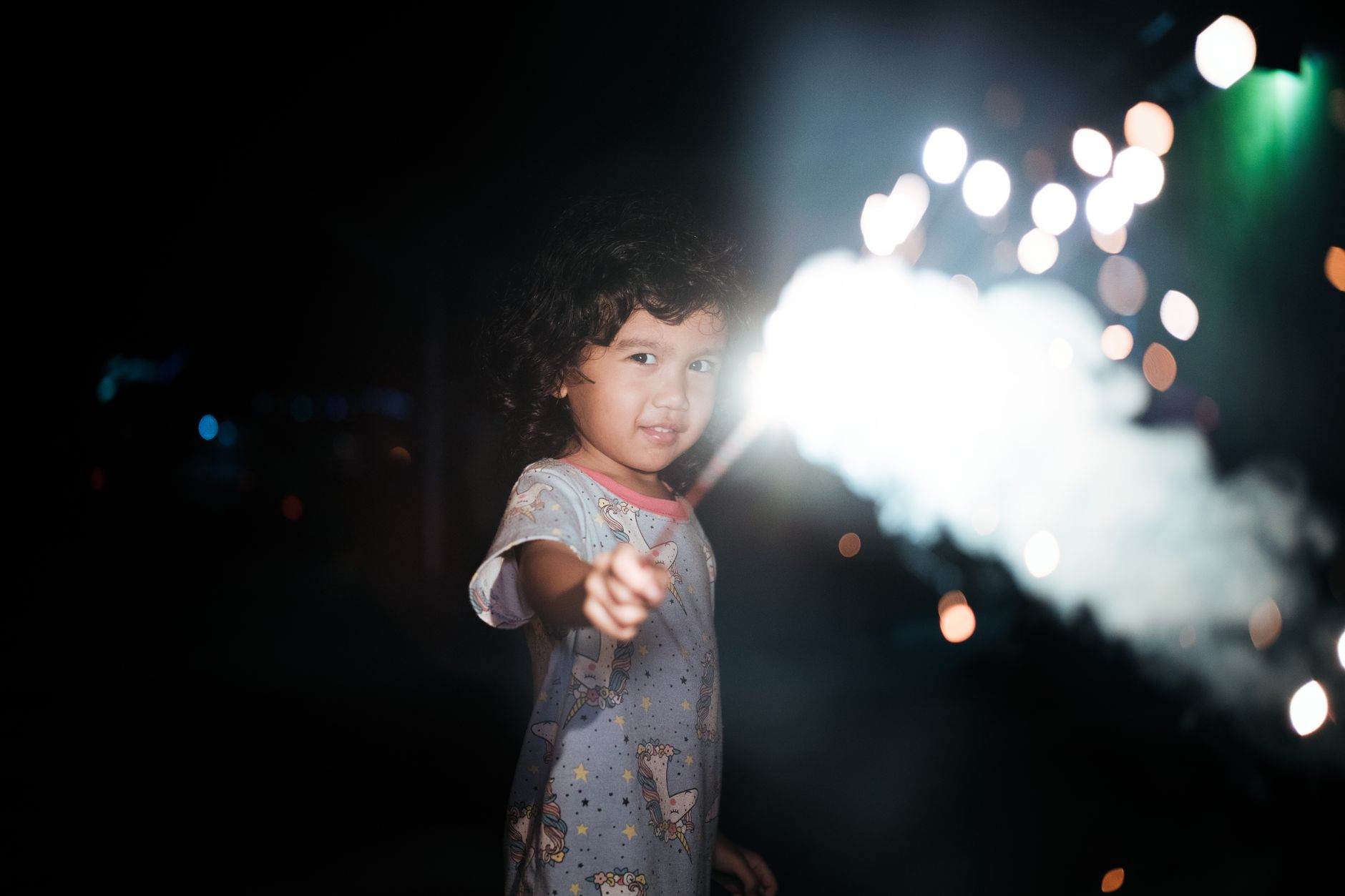
The UK Fireworks Review and most RoSPA guidance recommend five years as the minimum age for a child to hold a sparkler directly, and only then while wearing gloves and under close adult supervision. Four-year-olds can be allowed to watch an adult hold a sparkler from a safe one-metre distance. Under three, keep sparklers out of sight entirely because toddlers will reach for the glowing end faster than you can react. Spent sparklers should go straight into a bucket of water to prevent accidental burns.
Which Thermos flask size works best for a family bonfire night
The Thermos Stainless King 1.2L at around £35 is the right size for a family of four, giving roughly four mugs of hot chocolate with an inch of air gap at the top for pressure. For a parent and one child, the 500ml compact version at £22 is lighter in the pushchair pocket and still keeps a drink hot for six hours. Avoid flasks under 400ml for cold evenings; the surface-to-volume ratio means the drink cools faster than useful.
Are supermarket fireworks safe for a small garden
Yes, provided you buy only Category F1 fireworks, which are specifically designed for garden use with a one-metre safety distance. Sainsbury’s, Tesco and Argos all stock Category F1 selection boxes from £10 to £30 through October and early November. The box will state the category clearly. Avoid Category F2 fireworks in any garden under 10 metres long because the required five-metre viewing distance leaves no safe margin for children to stand. Independent firework shops have better variety and will advise honestly on what suits your space.
What is the best warm snack to bring on a bonfire-night walk
Foil-wrapped jacket potatoes stay warm for 60 to 90 minutes in an insulated lunch bag and can be eaten one-handed with a plastic fork or just the hands. Pre-cooked sausages from the Waitrose fridge section, wrapped in greaseproof paper, come second. For something quicker, M&S winter soup pots decanted into a soup flask work for 2 to 3 hours. Avoid anything crumbly, saucy, or that needs cutting; outdoor eating in the dark is best with handheld food.
Should I take a toddler to a big fireworks display
For children aged four and up, a community display can be a highlight of the year with the right preparation: ear defenders, warm layers, a flask of hot chocolate, and a planned early exit. For children under three, a home or small-garden event is almost always a better experience because the walk, crowd and noise of a large display outweigh the visual payoff. If you want to attend a big display with a toddler, choose one with a dedicated child area at the back and leave at the first sign of distress.
How do I keep a child warm standing still outside in November
Layering matters more than any single warm item. Start with a thermal vest and leggings, add fleece-lined trousers, a jumper, and a padded coat with a hood. Thermal mittens are warmer than gloves because fingers share heat. Waterproof wellies or boots with wool-blend socks keep feet warm; hands and feet are where children feel cold first. A hat covering the ears, not just the top of the head, makes a bigger difference than most parents expect. Keep a wool blanket in the pushchair for the walk back.
What should I do if a firework lands near someone
Move everyone away from the firework immediately, do not approach it even if it looks spent, and wait at least 30 minutes before anyone goes near it to confirm it will not re-ignite. Douse the firework with water from a safe distance using a hose or bucket. If a person has been hit, call 999 and keep the affected area still, cool it with running water for 20 minutes if it is a burn, and never apply butter, ice or creams. Most firework injuries in the UK happen to people standing within three metres of the launch zone, not from stray fireworks.
Are the Center Parcs bonfire-night breaks worth the money
Center Parcs runs private firework displays through its November weeks at Longleat, Elveden, Sherwood, Whinfell and Woburn Forest, included in the price of a short break. For families of under-fives, the practical advantage is huge: the walk from lodge to viewing area is five to ten minutes, there is no parking, and you can take an overstimulated toddler back to the lodge quickly. The cost per night is higher than a typical holiday park and books out early, so plan from August if you want 5 November dates.