Autumn weaning has a specific rhythm in British households. Babies born in the spring hit the six month solids milestone right as the clocks change, kitchens turn colder and the reality of purée splatter meets the reality of laundry taking longer to dry. The gear that gets a family through this phase tends to be the same four brands recommended repeatedly at Boots, John Lewis and JoJo Maman Bébé: Munchkin, Tommee Tippee, Nuby and OXO Tot. Each has strengths that show up quickly in daily use, and weaknesses that only reveal themselves at the sixteenth mealtime of the week.
This round up compares starter cups, bibs, food processors and silicone plates across the four brands using current UK stock verified in early September 2026. Prices are in GBP from John Lewis, Boots, JoJo Maman Bébé and Amazon UK. The intent is to help parents build a practical weaning kit for autumn without spending unnecessarily, and to understand why the same category name from four brands can produce dramatically different experiences at the highchair.
Where the four brands sit in the British weaning market
Munchkin is the American originated brand that has become a staple at Boots for weaning accessories in particular. The 360 Miracle Cup and the LATCH bottles are widely available, and the brand’s silicone bibs and snack catchers appear in most nursery shopping lists. Munchkin sits at the value end of the premium market, with cups from £4 to £8, bibs from £5 to £10 and no significant electrical range.
Tommee Tippee is the British brand headquartered in County Durham that dominates the bottle and cup market and offers a genuine end to end weaning ecosystem. The Explora and Superstar ranges cover cups, bowls, plates and utensils, and the brand also makes the Quick Cook Baby Food Maker at around £69 to £85. Tommee Tippee is at every major UK retailer and often on Boots Parenting Club offers.
Nuby is the American brand best known for its silicone teethers, no spill cups and softer feeding accessories. UK stock is strong at Amazon UK, Boots and Tesco baby aisles. Nuby prices sit slightly below Tommee Tippee, with the Sipeez and iMonster cup ranges from £3.50 to £7, and its silicone bibs at £6 to £9.
OXO Tot is the kids’ arm of the American housewares brand OXO, and it targets a slightly more design conscious end of the market. Prices are higher, with plates at £12 to £16, cups at £8 to £12 and the OXO Tot Sprout High Chair reaching £250 plus. Stock is strongest at John Lewis and JoJo Maman Bébé, with a smaller Amazon UK presence.
Starter cups and the transition from bottle to independent drinking
The starter cup category is where Munchkin has historically led, and the 360 Miracle Cup remains the most recommended cup at British baby groups. It looks like a normal open topped cup but has a valve that only releases liquid when the child sucks or drinks from the edge. This mimics real cup drinking rather than bottle sucking, which speech and language professionals prefer for oral development. At £5.99 for a single cup or £9.99 for a two pack at Boots, the value is excellent.
Tommee Tippee counters with the Superstar Sippee, First Sips and Trainer ranges, which move through progressive stages from a soft spout at six months to a straw cup at nine months and an open cup at twelve months. The Superstar Insulated Straw Cup at £8.99 is a standout, keeping liquids cool for six hours and surviving the drops that inevitably follow. The valve system is intuitive for parents used to Tommee Tippee bottles.
Nuby’s approach is softer, with silicone spouts that flex and give under the gums during teething. The Nuby First Cup at £3.50 and the No Spill Sipper at £5.99 are the entry level options, and the Nuby brand tends to appeal to parents who want their child to move gradually and gently from bottle to cup rather than jumping straight to a hard open topped cup.
OXO Tot’s Transitions Straw Cup at £11 to £13 and Grow Bottle at £10 to £12 are the design led choices. The straw cup is dishwasher safe on the top rack, has a removable straw for cleaning and includes a leak proof lid for handbag use. It survives an autumn of nursery bag transit better than most competitors, though the price is roughly double Munchkin equivalents.
Silicone plates, suction bases and food that stays on the table
Silicone suction plates have transformed weaning by keeping the plate where the parent put it, and the four brands take different approaches to shape, suction strength and portion sizing. Munchkin’s Silicone Splat Mat at £14 and the Stay Put Plate at £10 to £12 offer moderate suction and generous compartments. The suction is reliable on flat, clean highchair trays but less effective on textured surfaces, which some IKEA Antilop trays are.
Tommee Tippee’s Weaning Plate with silicone suction base at £8.99 to £11.99 is priced very competitively and comes in bright colours that children respond to. The suction is weaker than the specialist competitors like Ezpz, but adequate for six to nine month feeding when babies are not yet strong enough to lift the plate off. By ten to twelve months, the child will typically defeat any suction system.
Nuby’s Sure Grip Miracle Mat at £11.99 has strong suction and a wider base than the competition, which helps with balance. The plate compartments are smaller than Munchkin, which suits smaller portions and less waste in the early weaning stages when most food will not be eaten. Nuby’s silicone quality is genuinely comparable to the more expensive brands.
OXO Tot’s Silicone Divided Plate at £14.99 to £16.99 has the strongest suction of the four and a more restrained aesthetic that suits parents who value the look on Instagram or on a plain wooden highchair. The compartments are shallower than Nuby but wider, which suits a slightly more advanced weaning stage where the child is finger feeding and needs to see the food clearly.
Bibs, catchers and the laundry reality
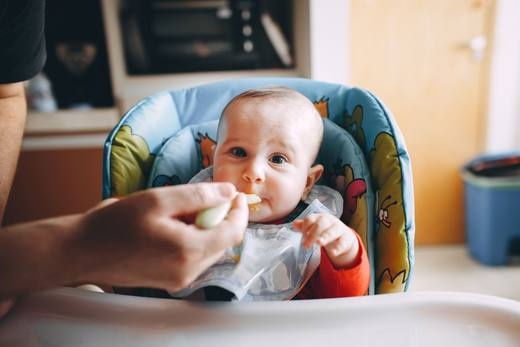
The bib category shows the biggest range across the four brands. Munchkin’s silicone bibs at £5.99 to £9.99 come with a moulded catcher pocket at the bottom that genuinely holds dropped food. The neck adjuster is a plastic buckle that some parents find fiddly, but the durability is excellent and the bibs wipe clean with a damp cloth in seconds. This is the everyday bib that wins on speed.
Tommee Tippee’s Explora Roll and Go bibs at £5.49 for a two pack are fabric with a wipe clean coating and a plastic backing. They roll up small for changing bags but do not have the catcher pocket. For parents doing baby led weaning with wet foods, these bibs get overwhelmed quickly. For puree feeding at nine to twelve months when food is more contained, they work well.
Nuby’s silicone catcher bibs at £6.99 to £8.99 are functionally similar to Munchkin, with a slightly softer silicone that older babies find more comfortable. The neckline adjuster on Nuby is a peg rather than a buckle, which parents tend to prefer for one handed operation. The catcher pocket is slightly smaller than Munchkin, so it fills up faster with baby led weaning portions.
OXO Tot’s Roll Up Bib with catch all pocket at £12.99 is the premium option, in soft silicone with a lower profile catcher that many parents find more elegant on the bib but slightly less effective at catching wet foods. It rolls into a compact shape for travel, which is genuinely useful for going to grandparents’ houses or restaurants. The higher price reflects the design rather than a functional advantage over Munchkin or Nuby.
Food processors and the make ahead reality
Only Tommee Tippee among the four sells a dedicated baby food processor. The Quick Cook Baby Food Maker at £69 to £85 steams and blends in a single unit, which suits time poor parents who batch cook on Sundays. It handles about 150g of vegetables per cycle, produces smooth puree and cleans in the dishwasher on the top rack. The unit is larger than most parents expect and takes counter space that autumn kitchens often lack.
For parents without a dedicated baby food maker, a standard hand held blender does the same job for less money. The Braun MultiQuick Baby at John Lewis at around £45 to £55 handles autumn root vegetables like squash, sweet potato, parsnip and carrot without difficulty. A steamer basket over a saucepan and a hand blender is arguably the more flexible setup for a family cooking real meals rather than dedicated baby food.
Munchkin, Nuby and OXO Tot do not compete in the food processor category directly, but each sells food storage solutions that support the batch cook approach. Munchkin’s Fresh Food Freezer Trays at £8 to £10 make six portions per tray and pop out cleanly once frozen. Nuby’s Garden Fresh Squeeze Feeder at £5.99 lets parents fill their own pouches from home cooked food, which reduces reliance on Ella’s Kitchen and Aldi Mamia pouches for on the go feeding.
OXO Tot’s Baby Blocks Freezer Storage at £15.99 for six containers uses individual airtight cubes with lids, which stack neatly in freezer drawers and prevent freezer burn better than tray systems. For parents planning a serious autumn batch cook programme, the OXO Tot system is the most organised, though it costs roughly double the Munchkin equivalent for the same capacity.
Value for money across the whole weaning kit
Building a starter kit across the four brands produces meaningfully different total costs. A Munchkin kit of two 360 cups, two silicone bibs, one suction plate and freezer trays comes to around £45. A Nuby equivalent lands at £42. A Tommee Tippee kit including the food processor pushes to £120, and OXO Tot without a processor still reaches £75 to £85. For a first baby, a Munchkin or Nuby starter kit is the sensible entry point.
The saving from choosing Munchkin over OXO Tot is roughly £30 to £40 across a starter kit, which pays for two weeks of nappies or a chunk of the autumn heating bill. Whether the OXO Tot design premium is worth this depends on personal preference and how much the parent uses the items themselves. Grandparents and childminders often find OXO Tot more intuitive because the design is more considered.
Tommee Tippee occupies the middle ground on total spend for a mixed kit, and the strength is having a coherent ecosystem where cups, plates and bottles work together. The Superstar range in particular is designed so that colours and shapes match across the categories, which appeals to parents who want a coordinated look and simple restocking. Boots Parenting Club regularly offers 20 percent off the Tommee Tippee range, which shifts the value calculation significantly.
Nuby is the quiet value winner for parents who prioritise function over brand recognition. The silicone quality is excellent, the cup designs work reliably, and the price sits below both Munchkin and Tommee Tippee for equivalent items. The main gap is the food processor category, where Tommee Tippee’s Quick Cook has no direct Nuby competitor.
Stock, sales and where to buy in autumn
Boots is the strongest UK retailer for all four brands, with the fullest range of Munchkin and Tommee Tippee, a solid Nuby selection and a smaller OXO Tot presence. The Parenting Club discount of 10 percent on baby products plus stacked Advantage Card points makes Boots the most economical purchase location for most weaning items during the autumn.
John Lewis carries the full OXO Tot range and offers the two year guarantee that extends to weaning items, which is worth having on the food processor if you buy Tommee Tippee via John Lewis rather than direct. Amazon UK carries all four brands with the usual caveats about verified sellers, particularly on silicone plates and bibs where knock offs occasionally appear at suspiciously low prices.
JoJo Maman Bébé stocks a curated OXO Tot and Munchkin selection with occasional own brand alternatives at competitive prices. The loyalty scheme discount of 10 to 15 percent on autumn promotions and a small range of exclusive colours make JoJo worth checking. Tesco and Sainsbury baby aisles are the cheapest for Nuby and basic Tommee Tippee items during their periodic 25 percent off baby events, usually in September and January.
Comparison table
| Brand | Cup price (£) | Silicone plate (£) | Bib (£) | Best for |
|---|---|---|---|---|
| Munchkin | 4 to 8 | 10 to 12 | 5 to 10 | Value starter kits and daily use |
| Tommee Tippee | 5 to 12 | 8 to 12 | 5 to 9 | Coordinated ecosystem, food processor available |
| Nuby | 3.50 to 7 | 11 to 12 | 6 to 9 | Softer feeding, teething babies, budget conscious |
| OXO Tot | 8 to 13 | 14 to 17 | 9 to 13 | Design led, gifting, older weaning stage |
Regional pricing note: Northern Irish and Scottish John Lewis stock occasionally runs slightly higher than English pricing. Amazon UK Prime Day cycles push all four brands down 15 to 25 percent for short windows, and Boots Parenting Club triple points events in mid October are worth waiting for on larger purchases like the Tommee Tippee Quick Cook.
Do’s and Don’ts
| Do's | Don'ts |
|---|---|
| Do buy a Munchkin 360 cup as the first open cup transition | Don't skip the open cup stage in favour of straw cups only |
| Do check silicone suction on your specific highchair tray | Don't assume all suction plates work on textured surfaces |
| Do sterilise new cups and utensils before first use | Don't skip sterilising just because items look clean |
| Do batch cook autumn root vegetables into freezer portions | Don't rely solely on pouches for daily meals |
| Do sign up for Boots Parenting Club for baby discounts | Don't pay full price on Munchkin or Tommee Tippee weekly |
| Do choose a bib with a catcher pocket for baby led weaning | Don't underestimate the laundry cost of fabric only bibs |
| Do check dishwasher compatibility on silicone plates | Don't put suction plates through hot dishwasher cycles without checking |
| Do keep a second cup in the changing bag as a spare | Don't set out without a backup cup on nursery days |
| Do introduce open cups from six months alongside sippee | Don't rely on straw or spout cups past the first year |
| Do label cups and bottles for nursery drop offs | Don't send unlabelled items expecting a nursery to track them |
Frequently Asked Questions
When should I start weaning and what gear do I actually need on day one?
Most British babies start weaning at six months, in line with NHS guidance. On day one the essential kit is a soft silicone spoon, one shallow silicone bowl or plate with suction base, a bib with catcher pocket and an open topped starter cup like the Munchkin 360. Everything else can be added over the following six weeks as the baby’s appetite and preferences develop.
Are the Munchkin 360 cups really better than a normal sippy cup?
Speech and language professionals prefer them because they require the same drinking motion as an open cup, which supports oral development. Standard sippy cups with hard spouts encourage a sucking motion closer to bottle feeding, which some experts believe delays the transition to independent drinking. The 360 is a genuine middle step between bottle and open cup.
Is the Tommee Tippee Quick Cook worth buying?
For time poor parents batch cooking on weekends, yes. It saves fifteen to twenty minutes per session by combining steam and blend in one unit, and the smooth puree quality is excellent for early weaning. For parents already comfortable with a saucepan and hand blender, it duplicates existing kitchen equipment and takes counter space. Consider it a convenience purchase rather than an essential.
Which brand is best for baby led weaning?
Munchkin and Nuby both offer silicone bibs with generous catcher pockets that suit BLW mess levels. Munchkin’s Splat Mat under the highchair is a helpful additional purchase. OXO Tot’s silicone plates with strong suction hold up well to BLW but at a premium price. Avoid fabric only bibs during the messy first three months of BLW.
How do I keep silicone plates and bibs clean?
All four brands’ silicone items are dishwasher safe on the top rack with mild detergent. For hand washing, warm water and a soft brush removes food residue without degrading the silicone. Occasional deep cleaning with a paste of bicarbonate of soda and water removes stains from tomato based foods, particularly on lighter coloured items.
Are pouches from Ella’s Kitchen, Piccolo or Aldi Mamia okay as regular meals?
Occasional use for on the go feeding is fine and widely practiced, but pouches should not become the primary meal source. Home cooked purees and finger foods offer better variety, less sugar and reduced packaging waste. Refillable pouches from Nuby or Weesprout let parents make their own from batch cooked food, which combines convenience with home cooking.
When does a baby move from silicone plates to normal crockery?
Most children are ready for standard melamine or shatter resistant crockery from around eighteen months to two years, once they have the coordination to eat without hurling the plate. The transition typically happens gradually, with silicone still in play for messier meals and non silicone appearing for snacks and lighter foods. There is no rush to switch entirely.
What is the difference between Nuby and Munchkin silicone quality?
Both use food grade silicone that meets UK and EU safety standards. Munchkin tends to use a slightly firmer silicone that holds shape better under weight, which suits plates and heavy use bibs. Nuby uses a softer silicone that flexes more, which suits teething items and bibs where the baby’s neck comfort matters. Neither is objectively better; they suit different use cases.