Introduction
There was a point last year where my eyes felt permanently exhausted, gritty by 2 p.m., burning by 7 p.m., and completely done by the time I tried to read a single page of a book after the kids went to bed. I chalked it up to sleep deprivation (fair, given I have a toddler and a school age kid), but when I mentioned it to my optometrist, she immediately asked about my screen habits. When I actually added it up, work laptop in the morning, phone during school drop off, back to the laptop for work, phone during school pickup, TV in the evening, and doomscrolling before sleep, I was easily hitting seven to eight hours of screens per day. And that’s not unusual. According to current data, American adults now average over five hours on smartphones alone, not counting computers or TV. For millennial moms juggling remote work, parenting logistics, and the constant pull of social media, that number skews even higher.
The problem is, our eyes were not built for this. Staring at a screen, whether it’s a phone, laptop, or tablet, changes how often we blink, how our eye muscles work, and how much moisture stays on the surface of our eyes. The result is what eye doctors call digital eye strain or computer vision syndrome, and it’s affecting an estimated 50 to 66 percent of people who regularly use digital devices. Symptoms go beyond just tired eyes: headaches behind the eyes, blurry vision that comes and goes, neck and shoulder tension, difficulty focusing after looking at screens for long periods. If any of that sounds familiar, this piece is for you.
What’s Actually Happening to Your Eyes
When you look at a screen, you blink significantly less than normal, studies suggest blinking drops from a normal rate of about 15 to 20 blinks per minute down to 5 to 7 blinks per minute. Each blink spreads a fresh layer of tears across the surface of your eye, keeping it lubricated and clear. When you’re not blinking enough, that layer dries out. Combine that with air conditioning, heating systems, or a desk fan blowing in your direction, and you have a recipe for chronically dry, irritated eyes.
On top of that, your eye muscles are constantly working to maintain focus at a fixed close distance. Unlike looking out at a landscape, where your eyes relax, staring at a screen 20 inches away keeps those muscles in a sustained contraction for hours. Over time, that causes the heavy, aching feeling that many moms describe as “my eyes just feel tired.” It’s essentially a repetitive strain injury, but for your eye muscles. Knowing this changes how you approach the problem, because the fix isn’t a magic supplement or a new pair of glasses. It’s mostly about habits, positioning, and deliberate breaks.
The 20-20-20 Rule: Simple and Actually Effective
If there’s one tip that comes up in every piece of reputable eye health guidance, from the American Academy of Ophthalmology to the American Optometric Association, it’s the 20-20-20 rule. Every 20 minutes, shift your gaze to something at least 20 feet away, and hold it there for at least 20 seconds. That’s it. No equipment, no cost, no apps required (though there are apps that remind you).
What this does is give your eye muscles a chance to relax out of close focus mode. Looking at something far away causes the muscles that control your lens to release tension, the same way stretching a clenched fist gives relief. Twenty seconds isn’t long, but done consistently, it prevents the cumulative fatigue that builds up over a full workday. The trick is actually doing it. Try setting a timer on your phone, or use a natural cue, every time you finish a task and go to Slack or email, look out the window first. If you work near a window, even better: your eyes get the bonus of adjusting to natural light variation, which is gentler than fixed artificial light.
Screen Setup: The Stuff Most People Ignore
Where and how your screen is positioned matters more than most people think. The sweet spot for your monitor or laptop is roughly arm’s length away, about 20 to 28 inches, and positioned so the top of the screen is at or slightly below eye level. This keeps your eyes in a slightly downward gaze, which actually helps your upper eyelid cover more of the eye surface, reducing moisture evaporation. Looking up at a screen, common when a laptop is raised too high or a screen is mounted on a wall, keeps more of the eye exposed and accelerates drying.
Glare is another underrated culprit. If there’s a window directly behind your monitor, your eyes are constantly recalibrating between the bright backlit screen and the bright background behind it. Reposition your desk so windows are to the side, or use blinds to diffuse direct sunlight. Matte screen protectors, anti glare coatings on glasses, or simply adjusting your screen’s brightness to match the ambient light in the room can all make a noticeable difference. A screen that’s dramatically brighter than everything around it forces your pupils to constantly adjust, which is exhausting over the course of several hours.
Are Blue Light Glasses Actually Worth It?
This is the one question everyone has, and the honest answer is: probably not for eye strain, but maybe for sleep. Despite heavy marketing of blue light glasses as a solution for digital eye strain, the clinical evidence does not back that up. A comprehensive 2023 Cochrane Review, one of the most rigorous types of systematic analysis in medicine, looked at 17 randomized controlled trials involving over 600 participants and found that blue light filtering lenses showed no significant benefit for reducing eye strain, visual performance, or eye fatigue compared to regular lenses. The American Academy of Ophthalmology has consistently stated there is no scientific evidence that blue light from screens causes eye strain or eye damage.
That said, there is some research suggesting that blue light exposure in the evening can suppress melatonin production and delay the onset of sleep. If you’re scrolling in bed at 10 p.m. and then wondering why you can’t wind down, that’s a real issue, but the better fix is to turn on Night Shift or similar warm light modes on your phone (which actually filter more blue light than most commercial glasses do), and to set a hard stop on screen use 60 to 90 minutes before you want to sleep. If you already own blue light glasses and feel like they help, there’s no harm in wearing them. But if you’re considering spending money on them specifically to fix eye strain, the evidence says that money is better spent on a proper eye exam or a bottle of preservative free artificial tears.
Dry Eyes Are a Bigger Problem Than You Think
Dry eye disease is one of the fastest growing eye complaints among adults, and women, particularly in their 30s and 40s, are disproportionately affected. Hormonal fluctuations tied to perimenopause, postpartum recovery, and even hormonal birth control can all affect tear production and composition. Add screen use on top of that, and you’ve got a serious recipe for chronic discomfort.
Preservative free artificial tear drops are safe to use multiple times a day and genuinely help. The “preservative free” part matters because preservatives in regular eye drops can irritate the eye surface with frequent use. Brands like Systane Ultra or Refresh Optive are widely available and affordable. Using a humidifier in your home office, especially in winter when heating systems dry out the air, is another practical step that pays off quickly. If your dry eye symptoms are severe or persistent, that’s worth a dedicated conversation with your optometrist; there are prescription options and procedures now that go well beyond eye drops.
Practical Ways to Actually Reduce Screen Time as a Mom
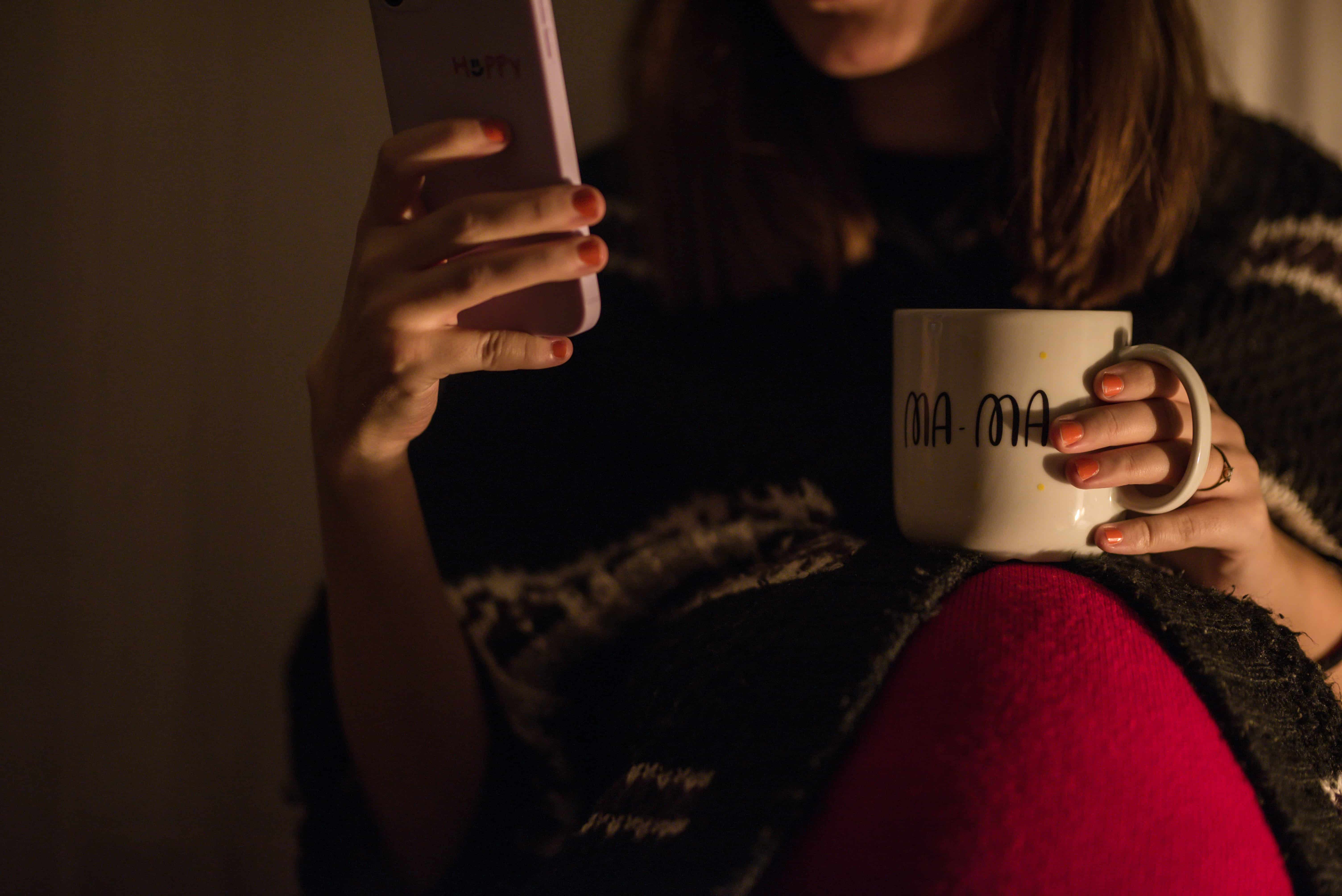
Knowing you should use screens less and actually doing it as a working mom are two very different things. But there are some real tactics that work without requiring you to overhaul your entire life. First, audit where your screen time is actually going. Most phones have built in screen time reports. Spend one week just looking at the data without trying to change anything, you might be surprised that three of your six daily hours are Instagram and YouTube, not things you need to be doing.
Next, create screen free pockets rather than trying to cut across the board. No phones at meals is a classic and effective one, it’s also a good habit for kids to see modeled. A no screen first 30 minutes in the morning means your eyes start the day rested and your nervous system isn’t immediately in reactive mode. If you work from home, a hard stop at a specific time, even 5 p.m. or 6 p.m., gives your eyes (and your brain) recovery time before sleep. Swap evening doomscrolling for something analog: a book, a podcast, or just conversation. Your eyes will thank you and your sleep quality will, too.
Do’s and Don’ts for Screen Time Eye Health
| Do's | Don't |
|---|---|
| Follow the 20-20-20 rule consistently throughout the day | Power through eye fatigue and skip breaks |
| Position your screen at arm's length and slightly below eye level | Look up at screens or hold your phone right in front of your face |
| Use preservative free artificial tears when your eyes feel dry | Use preserved eye drops more than 4 times per day |
| Match your screen brightness to the light level in the room | Work in a dark room with a very bright screen |
| Place your monitor so windows are to the side, not behind it | Sit with direct sunlight or a bright window behind your screen |
| Enable Night Shift or warm light mode in the evening | Scroll on your phone in bed with full blue light |
| Blink deliberately and consciously during long focus tasks | Stare without blinking, remind yourself to blink fully |
| Drink plenty of water throughout the day to support tear production | Rely on caffeine heavy drinks that can contribute to dehydration |
| Schedule an annual eye exam with your optometrist | Skip eye exams because your vision "seems fine" |
| Take outdoor breaks where your eyes can focus at a distance | Stay indoors all day under artificial lighting |
| Use a matte screen protector to reduce glare | Ignore glare from windows or overhead lights hitting your screen |
FAQs
Q: How many hours of screen time per day is too much for eye health?
There’s no single magic number, but most eye health experts suggest that symptoms start appearing for many people at around 6 or more hours of continuous screen use per day without adequate breaks. The issue isn’t just total time, it’s unbroken stretches without rest. Someone who does 8 hours of screen work with regular 20-20-20 breaks and good ergonomics will fare better than someone who does 4 hours in a hunched position without looking away. If you’re experiencing daily symptoms like headaches, blurred vision, or dry eyes, that’s your body’s signal that something needs to change regardless of the clock.
Q: Can screen time permanently damage your eyes?
Current research says no, digital eye strain does not cause permanent eye damage or worsen your long term vision. The symptoms are real and uncomfortable, but they’re reversible with rest and habit changes. What screens can affect is your sleep quality, which has downstream effects on overall health, including eye health. And prolonged squinting at poorly lit screens may worsen existing refractive issues or mask prescription changes that need updating. That’s why annual eye exams matter, your prescription may need adjusting even if nothing feels dramatically “wrong.”
Q: Do blue light glasses help kids, or is that also overblown?
The same evidence applies to kids, current research does not support blue light glasses as a meaningful remedy for eye strain in children. What is relevant for kids is myopia progression, which is associated with excessive close up work (screens included) and lack of outdoor time. The American Academy of Ophthalmology recommends children spend time outside daily, as natural light exposure is associated with slower progression of myopia. Limiting total screen hours and ensuring kids take breaks is more evidence backed than buying them blue light glasses.
Q: What’s the fastest fix when your eyes are already burning and tired?
Step away from the screen for at least 10 to 15 minutes, not to check your phone, but actual eyes closed rest or looking out at a distance. Warm compresses over closed eyes for a few minutes can relieve tension and stimulate the meibomian glands in your eyelids that produce the oily layer of your tears. A few drops of preservative free artificial tears applied before closing your eyes helps, too. Splash cold water on your face and around your eyes. This combo, break, warmth, drops, cold water, resets your eye surface more effectively than any product you can buy.
Q: Should I see a doctor about my eye strain, or is it something I can manage myself?
Most mild digital eye strain can be managed with the habit and ergonomic changes described in this post. But see your optometrist if: your symptoms are severe, happening daily, and not improving with breaks; you’re getting frequent headaches; your vision is blurring or you’re seeing double; or you notice any sudden changes in your vision at all. Sudden vision changes always warrant prompt attention. Also, if you haven’t had an eye exam in over a year and you’re spending significant time on screens, it’s worth checking in, an outdated prescription makes eye strain significantly worse.
Q: Does being on screens more during pregnancy or postpartum make eye strain worse?
Yes, it can. Hormonal changes during pregnancy and postpartum affect tear composition and production, making the eyes more prone to dryness. Combined with the sleep disruption of having a newborn, which already taxes the eyes, and the increase in phone use that naturally comes with new parenthood (hello, middle of the night feeding scrolls), it’s a tough combination. Preservative free drops are safe during pregnancy and breastfeeding, and the 20-20-20 rule costs nothing. If you’re experiencing significant vision changes during pregnancy, always mention it to your OB, as some are linked to blood pressure and other conditions worth monitoring.