Introduction
Last summer, I loaded three kids, ages 4, 7, and 10, into our minivan for a 14 hour drive from Chicago to the Florida panhandle. My husband and I had done plenty of road trips before kids. We had a playlist, some snacks, and an open road. Now, we had a cooler that took up half the trunk, a backseat that smelled faintly of goldfish crackers, and a 4 year old who asked “are we there yet?” approximately every eight minutes. By the time we hit Tennessee, I had developed a finely tuned system, partly out of desperation, partly from obsessively reading every travel mom blog in existence the month before we left. That trip turned out to be one of our best family memories. Not because it was perfect. Because we were ready.
A road trip with multiple kids doesn’t have to be a white knuckle survival exercise. It does require a different kind of planning than trips you took before you had a small circus in your backseat. The families who have the best car trips aren’t the ones with the most gear or the biggest screens, they’re the ones who planned ahead, set realistic expectations, and gave themselves permission to stop at that random roadside dinosaur statue for twenty minutes because sometimes that IS the trip. This guide breaks down exactly how to plan, pack, entertain, and actually enjoy a family road trip with multiple children, from the pre trip prep all the way to pulling into the driveway back home.
Start Planning Earlier Than You Think You Need To
The single biggest difference between a chaotic family road trip and a smooth one is how much planning happens before you ever buckle a seatbelt. For a multi kid trip, that means sitting down at least two to three weeks ahead and mapping out not just your route, but your stops, your snack strategy, and your activity rotation.
Use Google Maps or a road trip planning app like Roadtrippers to identify rest stops, parks, or playgrounds roughly every two hours along your route. Kids need to move their bodies, a 15 minute playground stop does more for morale than any amount of snacks. Look specifically for stops with enough space for kids to actually run, not just a gas station parking lot where they stand next to the car while you fill up.
Plan your longest driving segments around nap time and bedtime if possible. Many experienced road trip families swear by the 4 AM departure strategy, load the car the night before, get everyone in their pajamas, and hit the road before sunrise. Kids fall back asleep for two or three hours and you knock out a huge chunk of distance before anyone asks for breakfast. It genuinely works.
If your trip is longer than 8-10 hours, strongly consider breaking it into two days with an overnight stop. A family friendly hotel with a pool buys you an enormous amount of goodwill from even the most road weary kids, and everyone sleeps better when they’re not starting the next morning already exhausted.
Pack Like You’ve Done This Before (Even If You Haven’t)
The packing mistakes most families make on road trips with multiple kids come down to one thing: putting things they need frequently at the back of the car. Pack for accessibility. The snack bag, wipes, the extra shirt for the kid who will absolutely spill something, all of that needs to be reachable from the front seat or in a small bag behind the passenger seat.
Each child gets their own backpack or small activity tote that lives at their feet or on their lap. Fill it with things tailored to them: sticker books and magnetic drawing boards for the littles, chapter books or a travel journal for older kids, card games and logic puzzles for tweens. Rotate items so they’re not burned through in the first two hours, keep a small bag of “new” activities hidden up front that you introduce around hour three when energy dips.
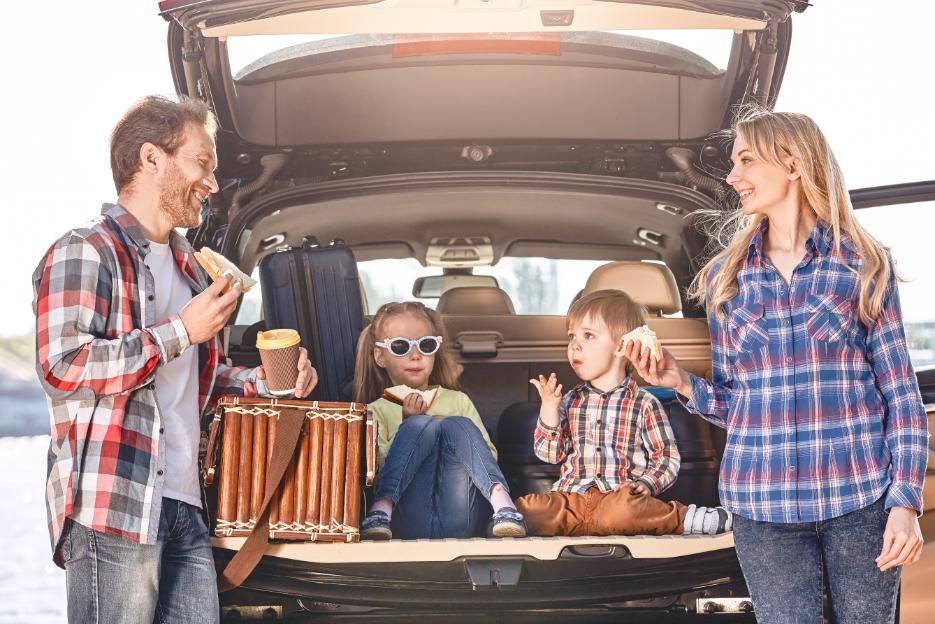
For snacks, the rule of thumb is one to two snacks per hour of driving, plus extra. Skip anything too sticky, crumbly, or strong smelling. Good road trip snacks include string cheese, trail mix, dried mango, pretzels with individual hummus cups, baby carrots, and squeeze pouches for the youngest. A soft cooler between the two back rows works perfectly for drinks and anything that needs to stay cold. And bring more wet wipes than you think you’ll ever need, then bring more.
Build an Activity Rotation That Actually Holds
The secret to keeping multiple kids entertained across a long drive isn’t having the fanciest tablets or the most activities, it’s rotating so nobody burns out on any one thing. Think in 30 minute blocks. Start with something all the kids can do together, then move to solo quiet time, then a car game, then maybe screens.
Together activities are gold for sibling bonding and they pass time faster than anything. The License Plate Game works from age 5 up, keep a running tally on a notepad. Road Trip Bingo (printable sheets are free online, or make your own) gets everyone scanning the windows for specific sights like a water tower, a yellow car, or a cow. 20 Questions and I Spy require no supplies at all. For a longer trip, audiobooks are genuinely the best investment you can make, a good audiobook like the Magic Tree House series or Harry Potter will have all your kids locked in and quiet for hours.
Solo activities give each child their own space mentally and physically. Older kids love a travel journal where they record what they saw, what they ate, and what surprised them. Younger kids do well with Wikki Stix, mess free watercolor books, or a Melissa & Doug Water Wow pad. Fidget toys, pop tubes, stretchy noodles, infinity cubes, quietly handle the wiggly energy of kids who can’t sit still.
Screens aren’t the enemy on a road trip; they’re a tool. Download movies and shows ahead of time since you’ll be out of WiFi range. Use them strategically, save them for that painful stretch between hour five and seven when everyone’s mood dips and you’re still two hours from the hotel.
Handle the Sibling Dynamics Before They Handle You
Here’s the part nobody warns you about: putting multiple kids in a confined metal box for eight hours will absolutely surface every sibling grievance that’s been simmering since March. Someone’s elbow is crossing the invisible seat line. Someone is singing too loud. Someone looked at someone else and now there is screaming.
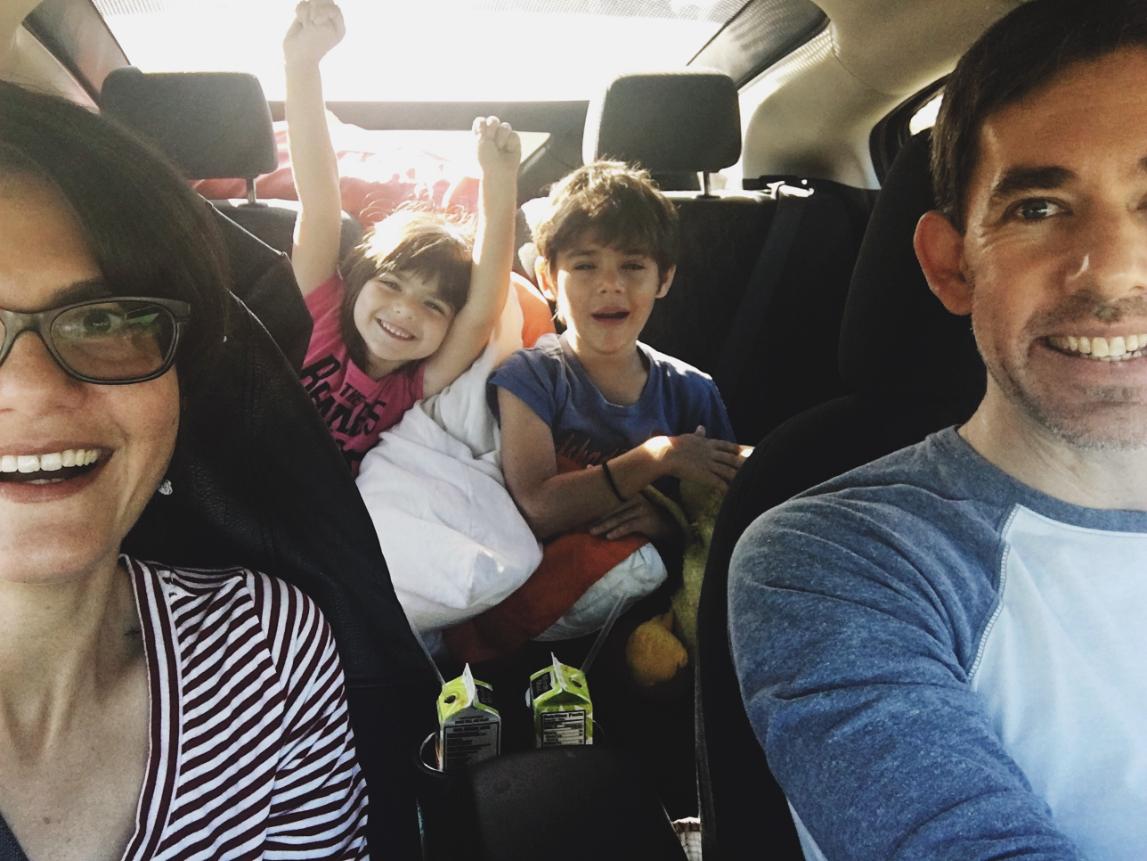
A few things actually help. Assign seats intentionally, if you have a middle seat, that’s prime real estate for the sibling who triggers the least conflict, or rotate who gets it each leg of the trip as a reward. Give each child their own small space: a blanket, a pillow, their own snack cup. Territory disputes drop significantly when everyone has a clearly defined domain.
Set expectations before you leave the driveway, not after the first fight. Tell the kids clearly: long drives mean staying in your own space, taking turns picking songs, and using words when something’s bothering you. A car behavior chart with sticker rewards works well for the 4-8 age range, they can earn screen time or a special treat at the next stop for good behavior in the car.
When fights do happen (and they will), redirect before you escalate. A snack, a new activity, or switching to a singalong playlist breaks the spiral faster than getting involved in who started it.
Smart Stops Make or Break the Trip
How you stop is just as important as how you drive. Aim to stop every two hours, but structure those stops to actually help. A quick gas station stop where kids just stretch next to the car isn’t enough, if the stop doesn’t include movement, you’ll be stopping again in 30 minutes.
Scout rest areas with actual green space ahead of time using iOverlander or just Google Maps satellite view. State welcome centers often have the nicest restrooms and wide lawns. National forest pulloffs are free and beautiful. Some families pack a small ball or frisbee just for stops, ten minutes of sprinting and throwing does more to reset kids than an hour of screen time.
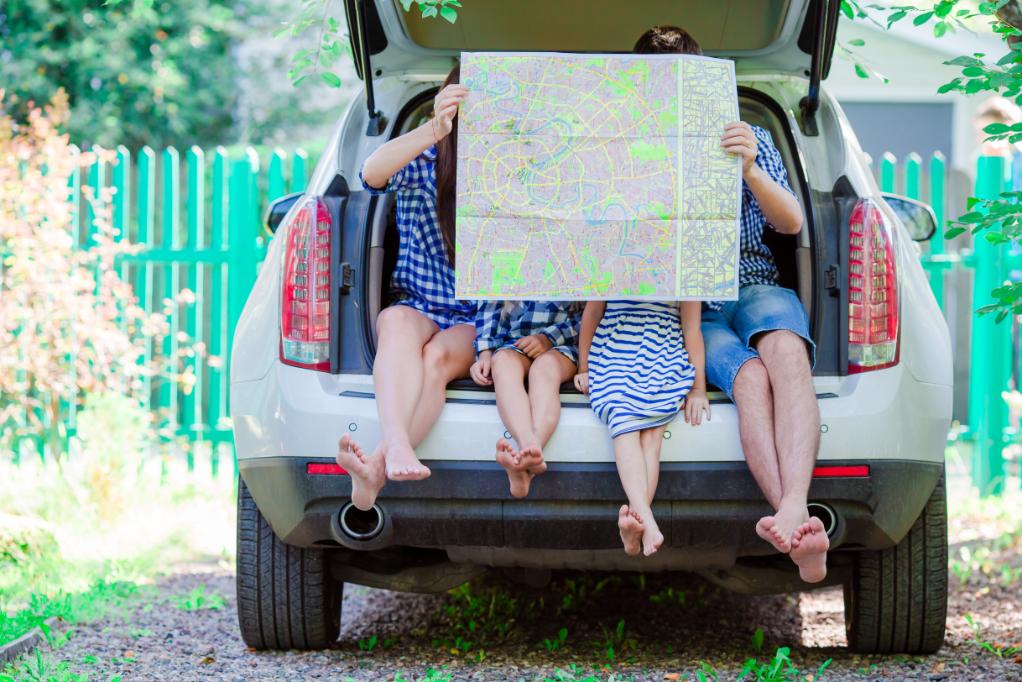
Let older kids help navigate. Give a 9 or 10 year old the job of tracking your progress on a paper map or the navigation app, and they suddenly have skin in the game. They’ll tell you when the next stop is coming, keep tabs on the estimated arrival, and feel important, all of which dramatically reduces the “are we there yet” loop.
Do’s and Don’ts for Road Tripping with Multiple Kids
| Do's | Don't |
|---|---|
| Pack each kid their own activity bag tailored to their age | Bring one shared bag of activities they'll fight over |
| Plan stops every 2 hours with real space to run | Skip stops to "make good time" |
| Depart early morning or overnight to use sleep time | Leave at noon and battle peak boredom in the afternoon |
| Download shows and audiobooks before you leave | Rely on data or streaming once you're on the road |
| Bring twice as many wet wipes as you think you need | Underestimate how messy a car full of kids gets |
| Use activity rotation in 30 minute blocks | Pull out every activity in the first hour |
| Set seat rules and behavior expectations before leaving | Wait until there's a meltdown to establish the rules |
| Pack snacks in an accessible, front of car bag | Bury the snacks in the trunk under luggage |
| Give older kids a navigation job or responsibility | Leave older kids with nothing to do and expect good behavior |
| Plan a fun arrival reward, pool, ice cream, movie night | Arrive exhausted with no wind down plan |
| Bring a car trash bag and wipes for each seat pocket | Let the car become a rolling trash can |
| Use audiobooks as a shared entertainment anchor | Rely only on individual screens that isolate kids |
FAQs
How do you keep multiple kids entertained on a long road trip without screens the whole time?
The activity rotation approach works best: alternate between car games everyone plays together (License Plate Game, 20 Questions, Road Trip Bingo), solo quiet activities tailored to each kid’s age, and then screens as a strategic reward rather than a default. Audiobooks are a brilliant middle ground, they’re screen free but engaging enough to keep all ages locked in. Libraries often let you download audiobooks for free through apps like Libby, so the cost is nothing.
What’s the best way to handle sibling fighting in the car?
Prevention beats intervention. Assign seats deliberately, give each child clear physical space with their own blanket and snack cup, and set behavioral expectations before you even start the engine. When a fight does break out, redirect first, offer a snack, switch to a singalong, or announce the next stop, before getting into who started it. A sticker reward chart works well for younger kids; earning something at the next stop gives them a reason to self regulate.
How often should we stop with multiple young kids?
Every two hours is a good baseline, but the stop quality matters more than the frequency. A stop needs to include actual movement, running, jumping, climbing, not just standing next to the car while you pump gas. If you can build in stops at playgrounds, state parks, or open rest areas, you’ll find kids re enter the car much calmer and you can often stretch the next leg longer.
What snacks are actually good for a road trip with kids?
Aim for snacks that aren’t too crumbly, sticky, or pungent, the car smell compounds fast. Good options: string cheese, trail mix, beef jerky, baby carrots and hummus packs, pretzels, dried mango, squeeze pouches, and individual bags of crackers. Pack them in an accessible spot, a soft cooler or hanging organizer behind the passenger seat, so you can hand things back without stopping.
Is it worth leaving very early in the morning for a road trip?
Absolutely, and most road trip families swear by the pre dawn departure. Loading the car the night before and leaving around 4-5 AM means kids fall back asleep for the first two or three hours while you quietly cover a huge distance. By the time everyone is fully awake and hungry, you’re already well into your journey. It also means you beat highway traffic in most cities.
What do I do if a child gets carsick on a long drive?
Keep the car cool and well ventilated, carsickness is significantly worse in a stuffy car. Seat carsick prone kids in the middle row facing forward where movement is minimized. Ginger chews or ginger candies help some kids; ask your pediatrician about children’s Dramamine for longer trips if carsickness is a known issue. Avoid screens for kids who are prone to it, and let them look out the window instead. Keep a couple of zip lock bags accessible just in case.
How do you handle bedtime and sleep logistics on a multi day road trip?
For overnight stops, book hotels with pools, even a 30 minute swim after a long drive is enough to burn off the pent up energy and help kids actually sleep. Stick to your usual bedtime routine as closely as possible: same pajamas, same stuffed animal, same wind down book. Kids who travel with their comfort items transition to new sleeping environments much more easily than those without them.