Introduction
Every few months I go through a smoothie phase. I tell myself I'm going to blend breakfast every single morning, I buy two bags of frozen mango, a tub of protein powder, and a bunch of spinach that I'm definitely going to use. And then by Wednesday the spinach is sad and I'm eating cereal over the sink again. I've done this cycle enough times now that I've finally figured out what actually works — and what's mostly just Instagram content that tastes like grass and disappointment. The real healthy smoothie recipes for moms are not the ones with twelve ingredients, spirulina, and a full five-minute prep ritual. They're the ones you can throw together before your kid finds the marker drawer.
What changed for me was treating smoothies less like a health project and more like a real meal. The ones I actually stick with have protein in them, some kind of fat so I'm not hungry twenty minutes later, and fruit that makes them taste like something I'd choose to drink. I've also gotten ruthless about prep — pre-portioning ingredients into freezer bags on Sunday so I can literally dump a bag into the blender and press a button. That's the version that actually survives real life with kids. Below are the recipes I keep coming back to, broken down by what you're trying to do: power through a morning, sneak in greens, recover postpartum, or just get something in you before school drop-off.
The Five-Minute Strawberry Protein Smoothie for Busy Mornings
This is the one I make most mornings. It takes about four minutes if the blender is already on the counter, five if I have to dig it out from behind the air fryer. You need: one frozen banana, one cup frozen strawberries, one scoop vanilla protein powder (I use Orgain Organic Whey, about 21g protein per scoop), three-quarters cup Greek yogurt, and half a cup of milk. Blend until smooth. That's it. The Greek yogurt does a lot of heavy lifting here — it adds around 10–12 extra grams of protein and makes it thick enough that it feels like a real meal, not a glorified juice. The frozen banana is non-negotiable for texture; fresh banana makes it too watery and warm.
.jpg)
For quick breakfast smoothies for busy moms, the protein-plus-fat formula is what actually keeps you full. If you're not using protein powder, double the Greek yogurt and add a tablespoon of almond butter. Total protein lands around 30–35 grams depending on your yogurt brand, which is enough to hold you through the morning chaos without needing to hunt for snacks at 10 a.m.
The Beginner Green Smoothie That Actually Tastes Good
If you've ever made a green smoothie and wondered why it tasted like a lawn, I can tell you exactly what went wrong: too much kale, too little fruit, and nothing creamy to balance it. Green smoothie recipes for beginners work best when spinach is the starting point — not kale. Baby spinach has almost no flavor compared to kale, and it blends completely smooth without leaving green flecks. You literally cannot taste it.
Start with this combination: one packed cup of baby spinach, one cup frozen mango, half a frozen banana, three-quarters cup coconut water or regular water, and a quarter-cup Greek yogurt. Blend the liquid and spinach first for about ten seconds before adding the frozen fruit — this helps everything break down properly without burning out your blender motor. The mango does the sweetening work, the banana adds body, and the result is a smoothie that's genuinely bright and tropical. Once you're comfortable with spinach, you can add a handful of baby kale alongside it. But honestly, I stuck with spinach-only for six months before I went there, and there's no shame in that.
High Protein Smoothies for Women Who Need More Than a "Light" Breakfast
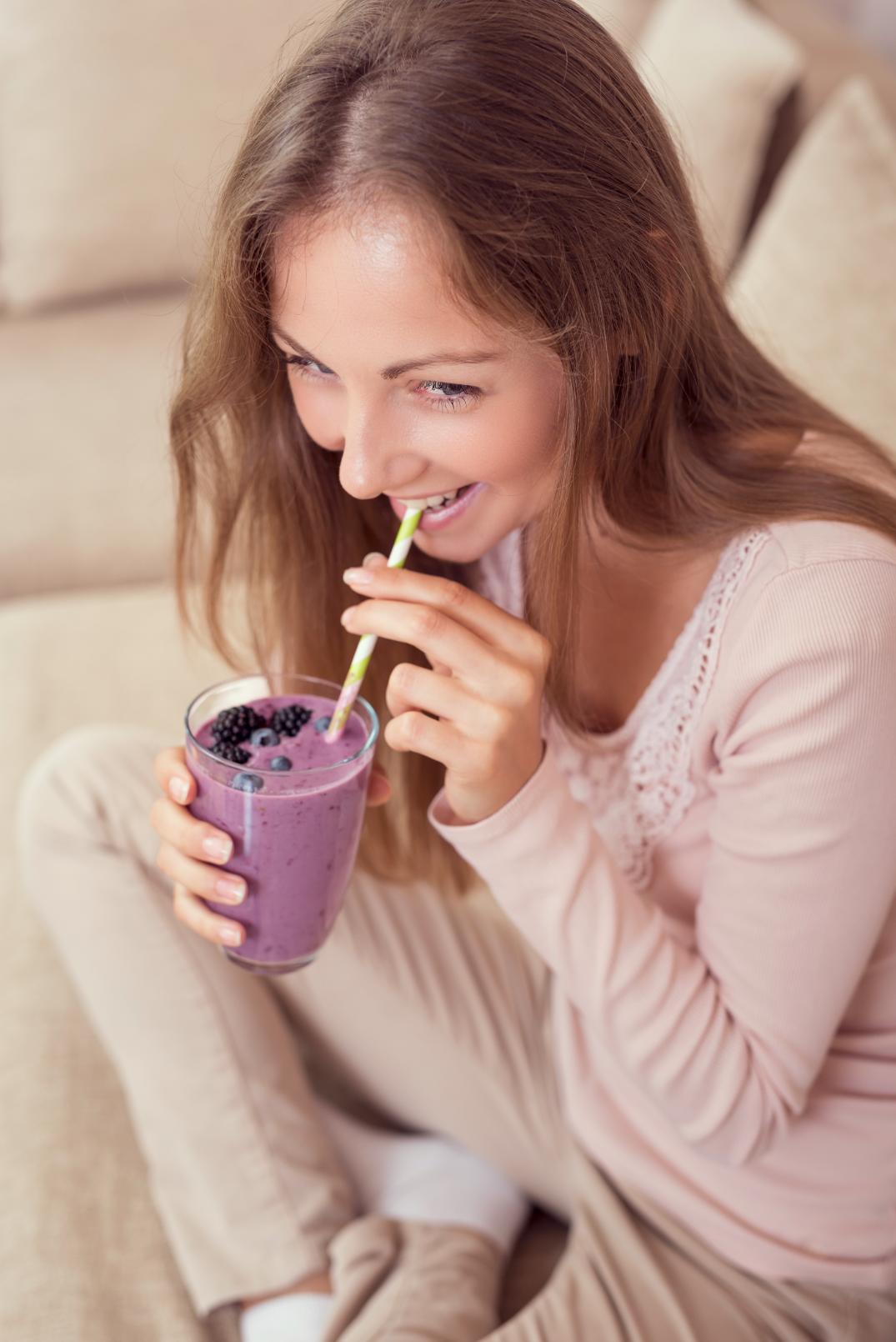
Standard fruit smoothies have protein. They just don't have enough of it — usually 5–8 grams, which is fine for a snack but not a meal replacement. High protein smoothies for women need to hit at least 25–30 grams to actually count as breakfast and keep blood sugar steady. Here are two approaches depending on your preference:
Peanut Butter Oat Smoothie: Half a frozen banana, two tablespoons peanut butter, one scoop chocolate protein powder, a quarter cup rolled oats, one cup almond milk. Blend for 60 seconds. The oats thicken it and add fiber — it ends up more like a meal in a cup than a smoothie. Around 35 grams protein. This one keeps me full until lunch, which almost nothing does.
Cottage Cheese Smoothie (yes, really): I resisted this one for a long time but cottage cheese in smoothies is having a genuine moment, and for good reason. Half a cup of cottage cheese (about 14g protein), one cup frozen blueberries, half a banana, half a cup milk, one tablespoon honey. Blend until completely smooth — the texture is creamy and there's zero cottage cheese flavor, just a slightly tangy richness. About 22–25 grams protein without any powder.
Postpartum Smoothie Ideas That Actually Support Recovery
The postpartum period is one of the hardest times to eat well. You're exhausted, hungry constantly (especially if breastfeeding), and you need one hand free at all times. Smoothies are genuinely one of the best postpartum foods for exactly that reason — they're fast, calorie-dense in a useful way, and can pack in nutrients you desperately need after birth. The American Academy of Pediatrics notes that breastfeeding moms need an extra 330–400 calories per day, along with more iron, protein, and healthy fats than usual.
For postpartum smoothie ideas, these are the ingredients worth focusing on:
- Oats — contain beta-glucan, which may support milk supply and adds fiber for postpartum digestion
- Ground flaxseed — one tablespoon adds omega-3s, fiber, and lignans that support hormone regulation; add it to literally any smoothie
- Spinach — iron and magnesium, both commonly depleted after birth
- Full-fat Greek yogurt or kefir — protein plus probiotics for gut health
- Nut butter — healthy fats that keep you full and support fat-soluble vitamin absorption
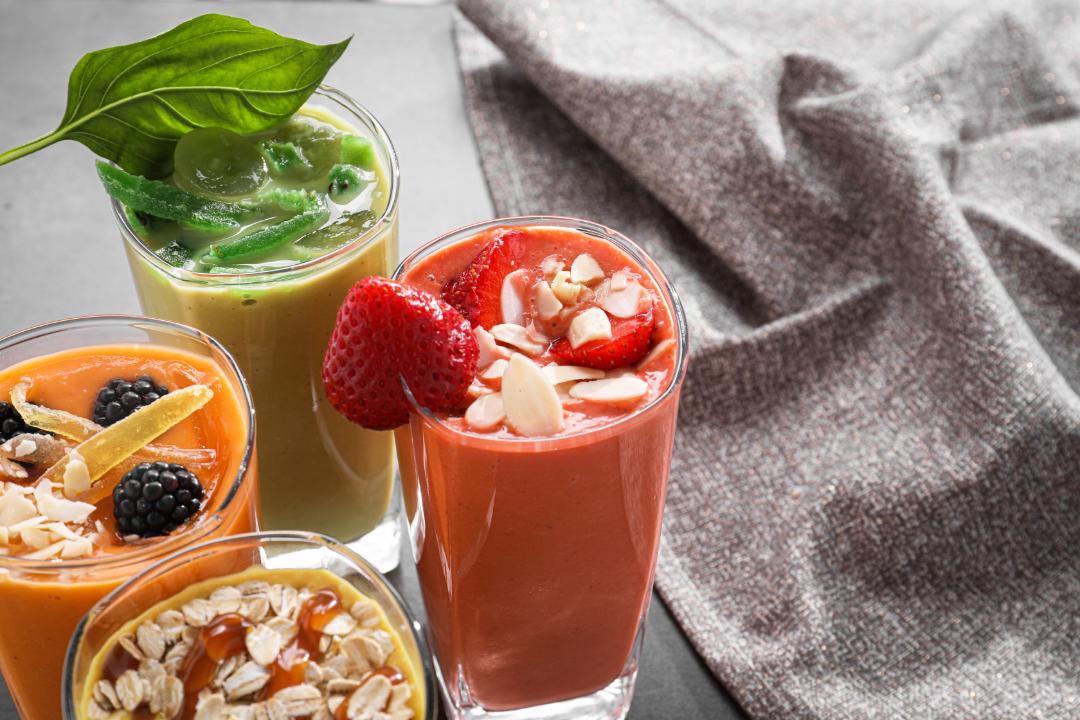
A solid postpartum recovery smoothie: one cup frozen mixed berries, half a cup oats, one tablespoon ground flaxseed, half a cup full-fat Greek yogurt, one tablespoon almond butter, one cup milk. Blend, drink, feel slightly more like a person. It's around 400–450 calories and packed with iron, protein, and fat that your body genuinely needs right now.
The Hormone-Balancing Smoothie for When You Just Feel Off
There are weeks where nothing is technically wrong but everything feels harder — I'm tired, snappy, craving everything, and sleeping through my alarm. A lot of this comes down to blood sugar instability and, as I've been learning more about, hormones that are doing something weird. The research on hormone-balancing smoothies is interesting: specific ingredients like ground flaxseed, cinnamon, and maca root have evidence behind them for supporting estrogen balance and cortisol regulation.
My go-to when I'm in one of those stretches: one cup frozen blueberries (high vitamin C, supports adrenal function), half a banana, one tablespoon ground flaxseed, half a teaspoon cinnamon, one scoop vanilla protein powder or half a cup Greek yogurt, and one cup almond milk. Optional: half a teaspoon of ashwagandha powder if you have it — some studies show it helps normalize cortisol. This doesn't taste like a supplement, it tastes like a berry smoothie with a warmth from the cinnamon. Blueberries are also a strong source of antioxidants that reduce inflammation, which matters when your body is running on stress and interrupted sleep.
Do's and Don'ts for Smoothie Success
| Do | Don't | |
|---|---|---|
| 1 | Use frozen fruit for thick, cold texture | Use fresh fruit unless you want a warm, watery result |
| 2 | Add a protein source every time (yogurt, powder, cottage cheese) | Rely only on fruit — it won't keep you full |
| 3 | Blend liquid and greens first before adding frozen ingredients | Dump everything in at once and wonder why it's chunky |
| 4 | Pre-portion ingredients into freezer bags on Sunday | Tell yourself you'll measure every morning |
| 5 | Use baby spinach as your starter green — it has almost no flavor | Start with kale if you're new to green smoothies |
| 6 | Taste and adjust before pouring — add banana for sweetness, yogurt for tang | Drink something you hate and swear off smoothies forever |
| 7 | Add ground flaxseed or chia seeds to nearly any smoothie | Skip healthy fats — they matter for satiety and vitamin absorption |
| 8 | Keep your blender on the counter so it's accessible | Store it in a cabinet and lose the motivation to get it out |
| 9 | Add oats for staying power if you need to skip a morning snack | Add too many oats — two to three tablespoons is plenty |
| 10 | Rinse your blender with warm soapy water immediately after | Let it sit — dried smoothie in a blender is a nightmare |
| 11 | Use unsweetened almond milk or coconut water for low-sugar liquid base | Use juice as your base — it adds a lot of sugar with no protein |
| 12 | Start with one new ingredient at a time when experimenting | Change three things at once and not know what worked |
FAQs
How do I make a smoothie that actually keeps me full until lunch?
The key is protein plus fat. Most smoothies fail the fullness test because they're mostly fruit and liquid — which means a blood sugar spike followed by a crash around 10 a.m. You need at least 20–25 grams of protein (Greek yogurt, protein powder, cottage cheese, or a combination) and a fat source like nut butter, chia seeds, or avocado. Adding a quarter cup of rolled oats also helps — they slow digestion and add fiber that keeps hunger at bay for longer.
What's the best protein powder for smoothies?
Depends on your goals and tolerances. For taste and mixability, Orgain Organic Whey Protein in vanilla is a reliable everyday option. For dairy-free, Garden of Life Organic Plant Protein blends smoothly without the chalky texture some plant powders have. If you're breastfeeding, check for any ingredients you're avoiding. Collagen peptides are another option — they're unflavored, dissolve completely, and add around 9–11 grams of protein per scoop without changing the flavor of your smoothie at all.
Can green smoothies actually taste good, or are they always a little gross?
They can genuinely taste good — the trick is the fruit-to-greens ratio and using the right greens. Baby spinach is almost tasteless in a smoothie. Pair one packed cup of spinach with frozen mango and a bit of banana and you'll get a bright, tropical flavor with zero green aftertaste. Where beginners go wrong is using too much kale (bitter) or not enough sweet fruit to balance it. Once you're comfortable, you can work kale in slowly alongside spinach.
Are postpartum smoothies safe while breastfeeding?
Most standard smoothie ingredients are completely safe. Where to be cautious: herbal add-ins like brewer's yeast (some people are sensitive), large amounts of flaxseed (moderation is fine — one tablespoon is the typical recommendation), and any herbal supplements like ashwagandha if you're breastfeeding (check with your OB or midwife first). Stick with whole food ingredients — spinach, fruit, oats, yogurt, nut butter — and you're on solid ground.
How do I keep smoothies from separating or getting watery?
Frozen fruit is the number one fix for both problems. It makes the smoothie colder, thicker, and more stable. If you're using fresh fruit, add a handful of ice. Greek yogurt also thickens smoothies significantly. If you need to make it ahead, store in a sealed mason jar in the fridge for up to 12 hours — give it a quick shake or stir before drinking. Pre-blended smoothies will separate a bit, which is normal; they haven't gone bad.
What's the cheapest way to make healthy smoothies regularly without spending a fortune?
Buy frozen fruit in bulk from Costco or Aldi — frozen mixed berries, mango, and spinach are all dramatically cheaper frozen than fresh, and the nutrition is comparable. A 32-oz bag of Kirkland frozen blueberries from Costco runs about $10–$12 and lasts weeks. Greek yogurt in large tubs (not individual cups) cuts cost significantly. For protein powder, buy a 2-pound tub rather than individual packets — the per-serving cost is usually half. Pre-bag smoothie ingredients on Sunday and you also reduce waste, which saves money over time.
How do I get my kids to drink green smoothies?
Start with a ratio that's mostly fruit and a tiny amount of spinach — like two cups of mango and half a cup of spinach — and use a colored cup or straw so they can't see the green. Once they're used to the flavor (which will taste like mango, not spinach), gradually increase the greens over a few weeks. Calling it a "mango smoothie" or "superhero smoothie" instead of a green smoothie also helps with the psychological barrier. Adding a frozen banana always makes it sweeter and more appealing to kids.