
Introduction
Let's be honest — motivation is a terrible foundation for a fitness habit. It shows up when you're fired up after seeing something inspiring, then quietly disappears the moment your toddler keeps you up until 2am or your newborn decides nap time is optional. If you've been waiting to "feel motivated" to start working out consistently, you may be waiting a long time. Not because you're lazy, but because motivation was never meant to be the engine. It's more like the spark that starts the car. What actually keeps the car running is habit.
For moms specifically, the research is clear and a little brutal: mothers of young children cut their physical activity by an average of 80 minutes per week after having kids, and more than half of women who were hitting recommended exercise targets before becoming parents stop meeting those targets afterward. That's not a willpower failure. That's a structural reality — broken sleep, full schedules, guilt about taking time for yourself, and a complete identity overhaul happening all at once. So if you've fallen off the workout wagon and can't find the energy to care, this article is not going to tell you to just try harder. Instead, it's going to show you how to build fitness habits for moms that don't depend on feeling motivated at all.
Why Motivation Fades (And Why That's Normal)
Before we talk about what to do, it helps to understand why motivation evaporates for so many moms. The biggest culprit is identity shift. When you become a mother, your sense of self reorganizes around your child. The version of you who used to go to spin class on Saturday mornings or run 5Ks for fun can feel like a different person — one who no longer quite fits into your current life. This is genuinely disorienting, and it quietly erodes your sense of ownership over your own body and time.
On top of that, guilt plays a massive role. Many moms feel that taking an hour to exercise is an hour stolen from their kids, their partner, or their never-ending to-do list. Research on working mothers consistently shows that guilt about extending childcare hours or "taking time" for themselves is one of the biggest reasons physical activity drops after having kids. So motivation doesn't just fade — it gets actively suppressed by a culture that tells moms their needs come last. Understanding this is important because it means the solution isn't to motivate yourself harder. The solution is to remove the barriers and make movement automatic enough that it doesn't require a decision every single day.
Start Embarrassingly Small
The number one mistake moms make when trying to restart a fitness routine is going from zero to sixty. You've been inactive for six months, you feel terrible, and you decide you're going to work out five times a week for 45 minutes starting Monday. That plan collapses by Wednesday, and then you feel worse than before.
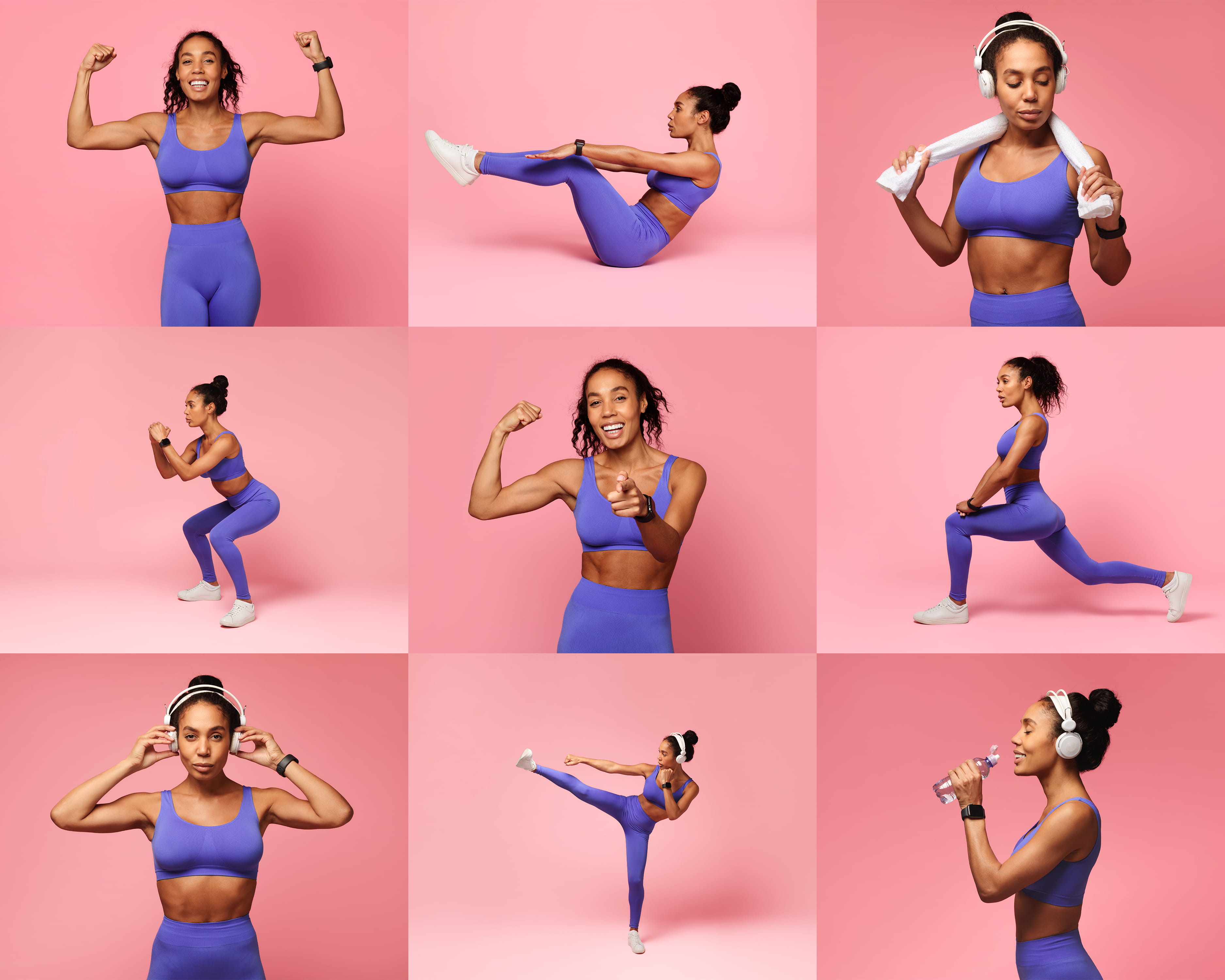
Instead, start with something that feels almost too easy. Ten minutes of walking around the block. Five minutes of stretching after your morning coffee. One YouTube yoga video on Tuesday. The goal at the beginning is not fitness — the goal is proof of concept. You're training your brain to see yourself as someone who moves regularly. Research on habit formation consistently shows that small wins build identity and momentum faster than ambitious plans that get abandoned. Once ten minutes feels automatic, adding fifteen minutes is easy. But you have to earn the right to scale up by proving the baseline first.
Habit Stacking: Attach Fitness to Something You Already Do
Habit stacking is one of the most practical tools for building fitness habits for moms, and it works exactly the way it sounds. You take a habit that already exists in your day — something you do automatically without thinking — and you attach movement to it. The existing habit becomes the trigger for the new one.
Here are some real examples that actually fit into a mom's day:
- After you brew your morning coffee, do 10 minutes of stretching or a quick bodyweight circuit in the kitchen while it steeps.
- While the kids are in the bath, do a set of wall sits, lunges, or pushups in the hallway.
- During school drop-off, park two blocks away and walk. It adds up.
- After you put the kids to bed, do a 20-minute workout video instead of immediately reaching for your phone.
- During your lunch break at home, swap one episode of whatever you're watching with a walk outside.
The beauty of habit stacking is that you're not trying to carve brand new time out of an already-packed schedule. You're retrofitting movement into time that already exists. Moms who use this approach report that exercise starts feeling like a natural extension of their routine rather than a separate task that requires effort to initiate.

Building an Exercise Routine After Baby: What the Timeline Actually Looks Like
If you're postpartum and trying to figure out when and how to get back into exercise, the timeline varies more than most fitness influencers will admit. The general guidance from OB-GYNs is to get clearance at your six-week checkup before starting structured workouts, but that's a floor, not a finish line. If you had a C-section, diastasis recti, or pelvic floor issues, you may need more time and a specific approach.
What works for most postpartum moms starting out:
- Weeks 1–6: Gentle walking, deep breathing, pelvic floor reconnection. Nothing more.
- Weeks 6–12: Walking longer distances, light bodyweight exercises — squats, glute bridges, modified pushups — with your doctor's clearance.
- Months 3–6: Adding resistance bands, light weights, or low-impact HIIT if your body is ready.
- 6 months+: Returning to higher-intensity exercise, running, or group classes if there are no ongoing issues.
The key thing to hold onto is that building an exercise routine after baby is not linear. Some weeks you'll do great. Other weeks a sleep regression will flatten you and you'll do nothing, and that's fine. The habit isn't destroyed by a bad week. It's only destroyed if you decide a bad week means you've failed.
How to Stay Consistent With Workouts When Life Is Chaos
Consistency is the whole game, and it's also the hardest part. Here's what actually helps:

Schedule it like an appointment. A workout that's not on the calendar is optional. A workout that's in your Google Calendar at 6:30am is a commitment. Treat it with the same non-negotiability as a pediatrician appointment.
Reduce friction the night before. Lay out your workout clothes. Put your sneakers by the door. Have your water bottle filled. The fewer decisions you have to make in the morning, the more likely you are to actually move.
Find your minimum viable workout. On the days when everything falls apart, what's the smallest amount of movement you can commit to? For some moms, it's a 10-minute walk. For others, it's a 15-minute YouTube video. Having a floor — a non-negotiable minimum — means you never fully break the streak even on your worst days.
Involve your kids when you have to. Baby carriers work great for gentle walks. Toddlers love doing "workout" with you — give them a stuffed animal as their "weight" while you do your routine. Kids who see their moms exercise grow up with a healthier relationship with movement, which is genuinely one of the best gifts you can give them.
Track progress in a way that isn't the scale. Energy levels, mood, how your clothes fit, how many stairs you can climb without huffing — these are all real measures of progress. The scale fluctuates for reasons that have nothing to do with your effort, especially postpartum. Pick metrics that actually reflect how you feel.

The Mindset Shift That Changes Everything
The moms who build lasting fitness habits don't do it because they're more disciplined. They do it because they've changed how they think about exercise. Instead of seeing it as something they do to fix their body or lose weight, they see it as part of who they are. "I'm someone who moves every day" is a completely different internal story than "I'm trying to get back into working out."
This shift — what researchers call identity-based habit formation — is slow, but it's powerful. Every time you show up for even a short workout, you're casting a vote for the identity "I am a mom who takes care of her body." Over time, those votes accumulate, and the habit stops requiring willpower because it just becomes who you are.
Do's and Don'ts for Building Fitness Habits as a Mom
| Do | Don't |
|---|---|
| Start with 10–15 minutes and build from there | Wait until you have a full hour to exercise |
| Schedule workouts like appointments | Leave workouts as vague intentions |
| Use habit stacking to attach movement to existing routines | Try to overhaul your entire schedule at once |
| Find a workout you actually enjoy | Force yourself to do exercises you hate |
| Celebrate showing up, not just results | Measure success only by the scale |
| Have a minimum viable workout for hard days | Skip entirely when the full session isn't possible |
| Walk with your kids or exercise alongside them | Use kid time as the reason you can't move |
| Rest without guilt when your body needs it | Push through signs of overtraining or injury |
| Track energy and mood, not just physical changes | Compare your progress to pre-baby fitness levels |
| Give yourself a full postpartum recovery timeline | Rush back to intense workouts before your body is ready |
FAQs
How do I start working out again when I have zero motivation as a mom?
Stop waiting for motivation and start with the smallest possible action. Commit to five minutes of movement — just five. Walk to the end of your street and back. Do one YouTube yoga video while the baby naps. Motivation tends to follow action, not precede it. Once you start moving, you'll often find you want to keep going. But even if you don't, five minutes still counts.
What is habit stacking and how does it help with fitness?
Habit stacking means linking a new habit to one that already exists in your routine. For example, you already make coffee every morning — you can stack a 10-minute stretch or a quick bodyweight workout onto that existing habit. It works because you're using an existing cue rather than trying to build a routine from scratch, which requires far less mental energy and decision-making.
How soon after having a baby can I start exercising?
Most doctors recommend waiting until your six-week postpartum checkup before starting structured exercise, but this varies depending on your delivery and recovery. C-section recovery, diastasis recti, and pelvic floor issues all affect timing. Start with gentle walking and pelvic floor exercises early on, then gradually progress with your provider's clearance.

What's a realistic workout schedule for a busy mom?
Three sessions a week of 20–30 minutes is genuinely enough to see physical and mental health benefits. If all three happen, great. If one or two happen, that's still a win. Consistency over time matters far more than the length of any individual session. Short workouts done consistently beat long workouts done occasionally.
How do I stop feeling guilty about taking time to exercise?
Reframe it as something you're doing for your family, not away from them. Exercise improves your mood, energy, and patience — all of which directly benefit your kids. You also model healthy behavior for them. Research shows that active parents raise children who are more physically active. It's not selfish. It's sustainable parenting.
What types of workouts work best for postpartum moms?
Walking is the most accessible starting point. From there, strength training with bodyweight or light weights is excellent for rebuilding core and postpartum strength. Low-impact HIIT, yoga, and Pilates are also well-suited. Running and high-intensity exercise should come later, once your pelvic floor and core have fully recovered.
How do I stay consistent when my schedule changes every week?
Focus on flexibility within structure. Have a rough plan — three workouts this week — but don't lock them to specific days. If Tuesday's plan falls apart, move it to Wednesday. The goal is hitting your weekly target, not hitting it on a specific schedule. A flexible system survives the chaos of motherhood far better than a rigid one.
Is it normal to feel more tired after starting to exercise?
Initially, yes. If you're starting from a place of deep fatigue, the first two weeks of exercise can feel harder before they feel easier. Your body is adapting. Most moms report that around week three or four, energy levels start improving noticeably. The first few weeks are an investment — push through gently, and the returns come.