Beach Safety Tips for Moms Traveling with Small Kids
The first time I took my two-year-old to the beach, I thought I had everything covered — sunscreen, snacks, a bucket and spade, the works. What I did not have was any idea how fast a toddler could run toward waves, how quickly a sandcastle can collapse into a hole deep enough to worry about, or how badly a sunburned baby shoulder would ruin everyone's sleep for the next three nights. Nobody handed me a guidebook.
So consider this yours. Beach days with little ones are genuinely wonderful — the squealing when a wave hits their ankles, sand between their toes, the pure sensory joy of it all. But the ocean does not care how adorable your kid is, and the sun is not making exceptions for family vacations. Getting the safety side right is what lets you actually relax and enjoy it. Here is what I wish I had known from day one.
Start with Sun Protection — Before You Even Leave the Hotel
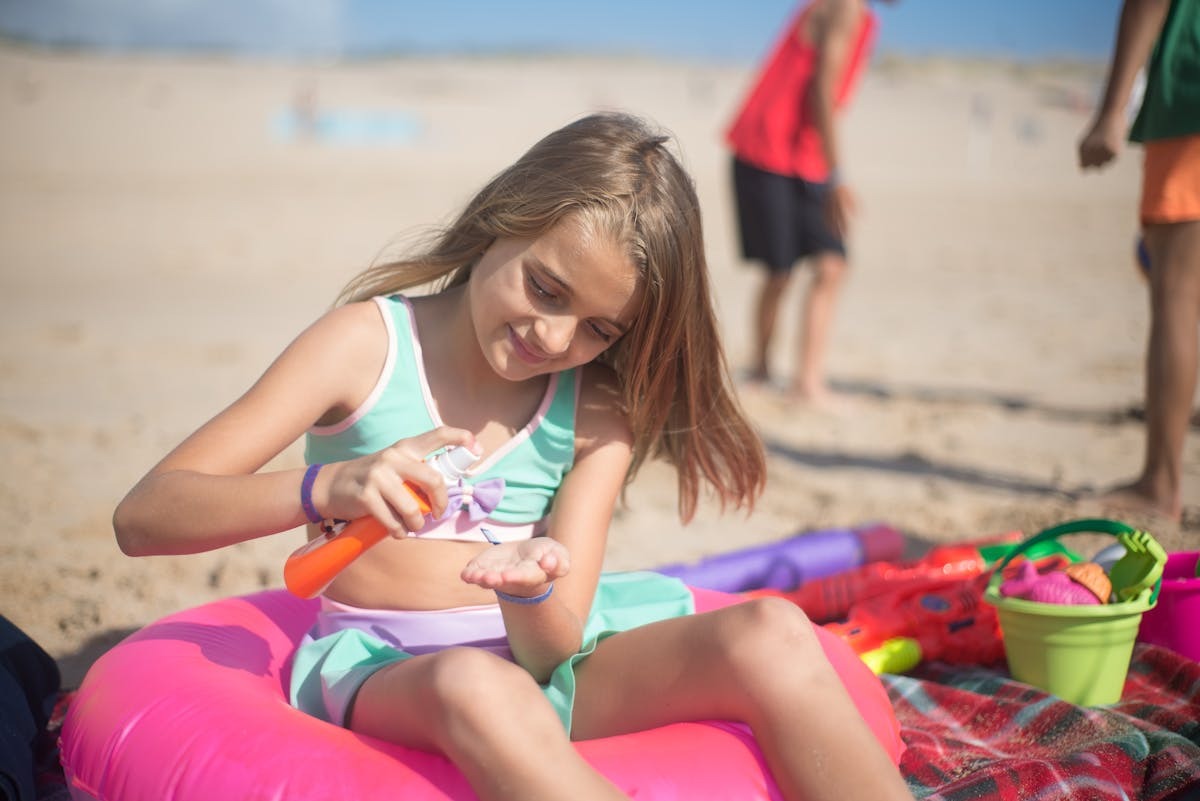
Sun damage happens faster than most parents expect, especially near water where UV rays reflect off both the sand and the ocean surface. The American Academy of Pediatrics is clear: babies under six months should not have sunscreen applied at all — they need to be kept in full shade, dressed in lightweight long sleeves, and covered with a wide-brim hat. For everyone six months and older, SPF 30 or higher is the minimum, and mineral-based formulas (zinc oxide or titanium dioxide) are the safest choice because they sit on top of the skin rather than being absorbed.
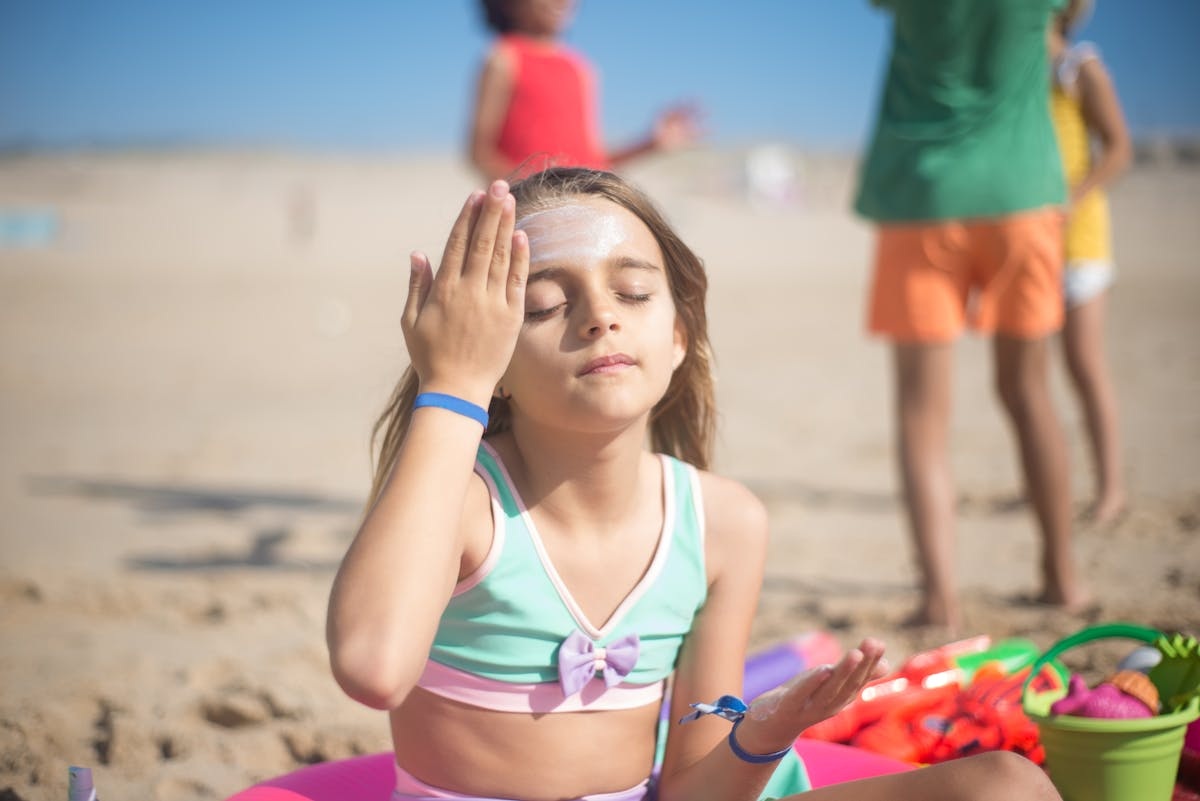
Apply sunscreen 20 to 30 minutes before you head outside, not when you arrive at the beach. Once you are there, you are already losing time. Reapply every two hours without fail, and immediately after any significant time in the water. For toddlers who hate the sunscreen process, the spray versions are faster — but you still need to rub them in properly. One practical trick: apply sunscreen at home during the morning routine so it is already on before the beach bag is even packed.
Dress Them for Protection, Not Just Cuteness
A rashguard is one of the best investments you will make for beach travel with small kids. A long-sleeve UPF 50+ top dramatically cuts down how much skin is exposed to the sun, which means less sunscreen reapplication stress and better protection overall. Pair it with UPF-rated swim bottoms or a one-piece for babies and toddlers. Add a wide-brimmed hat with a chin strap — the chin strap is non-negotiable, because hats come off in wind and water constantly without one.
Baby sunglasses with UV400 protection are worth bringing too, especially for kids who will be in bright reflected light near the water. And do not forget the swim diaper situation — regular diapers swell up to an alarming size in the ocean. Reusable swim diapers are more reliable for longer beach days and hold up better in waves than disposable versions.
Set Up a Shade Base Before Anything Else
The single best thing you can do when you arrive at the beach with small kids is set up your shade station first. A pop-up beach tent or UPF 50+ canopy gives you a dedicated retreat from direct sun, somewhere to put a sleeping baby, and a visible landmark so older kids know where home base is. Position it close to the water's edge but back from the wave line, with the opening facing away from the wind.
Keep this base stocked: water, snacks, dry clothes, sunscreen, and a first aid kit with after-sun gel, bandages, and antihistamine cream. Having everything in one place means you are not scrambling through a bag while a toddler heads for the waves.
Ocean Water Safety: The Rules That Actually Matter
This is the part where beach days can go from fun to dangerous in seconds. Small children — even confident ones who love the pool — are not prepared for ocean conditions. The ocean has current, wave surge, and an unpredictable floor. A child who swims beautifully in a pool can be knocked over and disoriented by a single wave break.
For toddlers and babies, stay in ankle-to-knee-depth water and never turn your back. The AAP recommends "touch supervision" for young children near water — meaning you are within arm's reach, not just watching from a few feet away. If your toddler is in any water beyond a shallow splash zone, a Coast Guard-approved life jacket or personal flotation device is not optional. Floaties, swim rings, and puddle jumpers are not certified life-saving devices — they are toys.
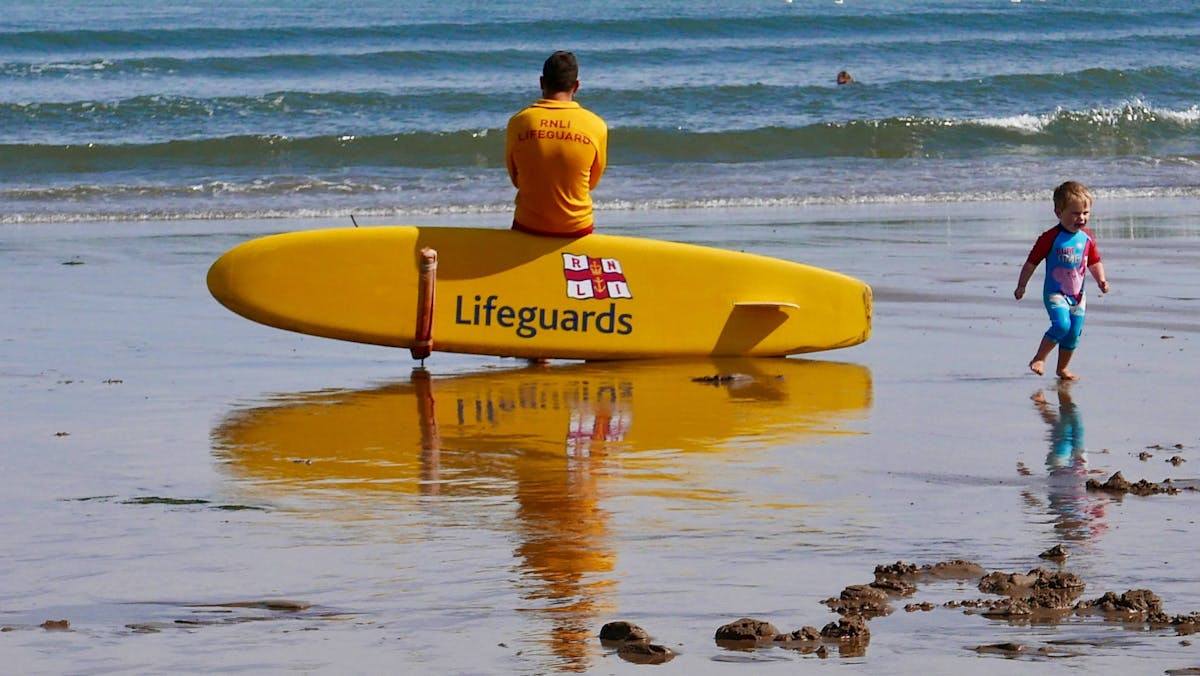
Keep an eye on the posted flags at the beach. Most lifeguarded beaches use a flag system: red means high hazard, yellow means moderate, green means low. If flags indicate rough surf or rip currents, keep the kids at the waterline or on the sand entirely.
Understanding Rip Currents and What to Do
Rip currents account for the majority of lifeguard rescues at ocean beaches. They are narrow, fast-moving channels of water that pull away from shore, and they do not look like much from the surface — which is exactly why they catch people off guard. Signs of a rip current include a discolored strip of water (often darker or choppier than surrounding water), foam or debris moving away from shore, and a visible break in the wave pattern.
If your child gets pulled by a rip current, the instinct to fight it and swim straight back to shore is the wrong move — it exhausts even strong adult swimmers quickly. Teach older kids (and remind yourself) to swim parallel to the shore until out of the current, then swim in diagonally. For toddlers, this is simply another reason why they should never be in the water without you right beside them and ideally in a flotation device.
If you are at a lifeguarded beach and anything feels wrong, wave and shout for the lifeguard immediately. This is not a moment to try to handle it quietly.
Hydration Matters More Than You Think
Kids get dehydrated faster than adults, and heat plus sun plus activity at the beach accelerates that significantly. A toddler between one and three years old needs roughly four cups of fluid a day under normal conditions — that number climbs on hot beach days. Build in hydration breaks every 20 to 30 minutes, not just when your child says they are thirsty. Thirst is a late-stage signal.
Bring more water than you think you need. Pack it in an insulated bottle or cooler so it stays cold — kids who refuse to drink warm water are not being difficult, they are being reasonable. If your child is not urinating at least every few hours, or if you notice dark-colored urine Bottom line — that is a hydration flag worth taking seriously.
Avoid giving small kids sugary drinks as hydration at the beach — juice and soda do not hydrate the way water does. Watermelon, cucumber slices, and frozen fruit pouches are good beach snacks that add water intake without the sugar spike.
Watch the Sand, Not Just the Water
Sand hazards are genuinely underestimated. Any hole dug in beach sand that is deeper than a child's knee is a risk — children can fall in and be partially buried, and wet sand compresses with surprising force. Set a simple rule: you dig, you fill. No leaving deep holes in the sand when you move spots or pack up.
Hot sand is also worth paying attention to. Surface sand on a sunny beach day can reach temperatures that cause burns on small feet in seconds. Flip-flops or water shoes from the car to your spot are not overcautious — they are genuinely useful. Check the sand temperature with your own hand before letting a toddler walk on it barefoot.
And if your beach allows dogs or has areas near seaweed and debris, watch for jellyfish washed up on the sand, broken shells, and other hazards that blend into the shoreline. Toddlers will pick up anything interesting.
Do's and Don'ts: Family Beach Safety Checklist
| Do | Don't |
|---|---|
| Apply SPF 30+ mineral sunscreen 20-30 min before sun exposure | Let babies under 6 months go without full shade coverage |
| Use a UPF 50+ pop-up beach tent for a shaded base | Rely on swimsuits alone for sun protection |
| Use Coast Guard-approved life jackets for toddlers in open water | Trust floaties or puddle jumpers as life-saving devices |
| Stay within arm's reach of young children near any water | Watch from a distance — touch supervision is the standard |
| Check beach flag warnings before letting kids near the water | Ignore posted warning flags or lifeguard instructions |
| Reapply sunscreen every 2 hours and after water time | Skip reapplication because it is easier |
| Offer water breaks every 20-30 minutes | Wait for kids to say they are thirsty |
| Keep sand holes shallower than your child's knee height | Leave deep holes unfilled when you change spots |
| Swim parallel to shore if caught in a rip current | Try to swim directly against a rip current |
| Learn basic CPR before beach travel with young children | Assume someone else at the beach will handle an emergency |
| Use wide-brim hats with chin straps for toddlers | Skip the chin strap — they come off constantly without it |
FAQs
At what age can I take my baby to the beach?
There is no specific age restriction, but for babies under six months, beach days require extra care. They cannot wear sunscreen, so full shade is essential — a UPF canopy, lightweight wrap, and wide-brim hat. Keep the trip short, avoid the hottest part of the day (10am–2pm), and watch for overheating signs like fussiness, skin that feels hot to the touch, and reduced wet diapers.
What sunscreen is safe for babies at the beach?
Mineral sunscreens with zinc oxide or titanium dioxide are the safest choice for babies and toddlers six months and older. Look for broad-spectrum SPF 50, water-resistant formulas. Brands like Thinkbaby, Babo Botanicals, and Blue Lizard Baby are well-rated by dermatologists and receive high safety scores from the EWG. Avoid chemical sunscreens with oxybenzone or avobenzone for young children.
How do I know if a beach is safe for young children?
Look for beaches with lifeguards on duty, low-grade wave breaks, and good water quality ratings. Check the flag system — green means low hazard. Research the beach beforehand using apps like My Swim Guide, which shows real-time water quality data. Avoid rocky or cliff-backed beaches for toddlers, and look for beaches with gradual sandbar entry rather than sudden drop-offs.
What should I do if my toddler gets caught in a wave?
Stay calm and get to them immediately — do not wait to see if they recover. If they are knocked over by a wave, the disorientation can panic even older kids. Scoop them up, move back to shallower water, and check them over. If they swallowed significant water and are coughing persistently, or seem lethargic after a wave incident, get to a lifeguard and call for medical help. Secondary drowning (from inhaled water) can occur hours later.
Should I bring a life jacket or just use water wings?
Bring a properly fitting Coast Guard-approved life jacket, especially for toddlers near open water. Water wings, puddle jumpers, and inflatable rings are swim aids — they can deflate, come off, or give a false sense of security. They are not certified flotation devices. If your child is near ocean water, a life jacket is the only appropriate choice.
How do I protect a toddler's skin at the beach without a fight?
Build sunscreen into the routine before leaving the house rather than at the beach. Let them pick their sunscreen (there are tinted and fruity-scented versions). Make a game of it — "magic shield time" works surprisingly well for two- and three-year-olds. UPF rashguards also reduce how much skin you need to cover with sunscreen, which cuts down on the battle significantly.
What time of day is best for beach visits with small kids?
Before 10am or after 3pm. UV radiation peaks between 10am and 2pm, and sand and air temperatures are most extreme at midday. Morning beach sessions tend to be cooler, less crowded, and have better conditions overall. Pack up for a midday rest and lunch, then head back for late afternoon — that is often the golden hour light that makes the best beach photos anyway.
What are signs my child is getting too much sun or heat?
Sunburn can appear up to 12 to 24 hours after exposure, so pinkness that starts during the day is already progressing. Heat exhaustion signs in kids include heavy sweating, pale or cold skin, weakness, fast heartbeat, and nausea. Heat stroke — a medical emergency — involves hot, dry skin, confusion, and loss of consciousness. If your child stops sweating in the heat or becomes difficult to rouse, call for emergency help immediately.
Image Tags
beach safety kids toddler, mom and toddler at the ocean, baby in sun hat beach, family beach tent shade, child in life jacket ocean waves, toddler sunscreen application, kids splashing shallow waves, mom holding baby at beach, family beach day setup, child in rashguard beach, woman applying sunscreen toddler, beach bucket and spade kids
Blog Tags
beach safety with kids, ocean safety toddlers, sun protection babies beach, beach water safety young children, family beach safety checklist, toddler beach tips, traveling with babies, beach day essentials, water safety toddlers, summer travel moms, beach vacation family, millennial mom travel